
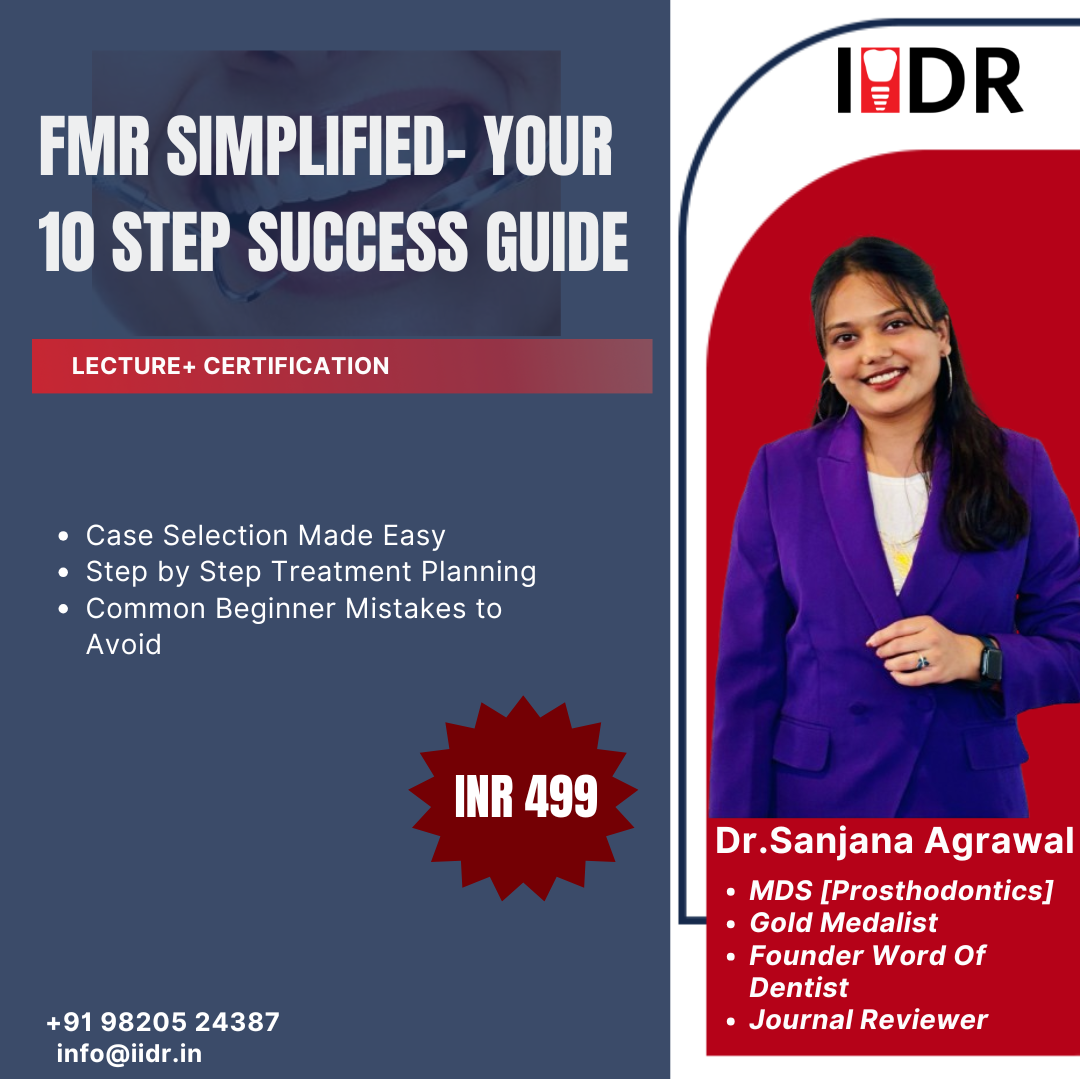
FMR Simplified: Your 10 Step Success Guide
Full Mouth Rehabilitation (FMR) is no longer just about restoring teeth—it is a comprehensive, strategy-driven approach that directly impacts function, aesthetics, occlusal harmony, and long-term stability. When planned correctly, it transforms compromised dentitions into predictable, stable, and biologically sound outcomes. …
Overview
Full Mouth Rehabilitation (FMR) is no longer just about restoring teeth—it is a comprehensive, strategy-driven approach that directly impacts function, aesthetics, occlusal harmony, and long-term stability. When planned correctly, it transforms compromised dentitions into predictable, stable, and biologically sound outcomes.
Beyond individual crowns or restorations, full mouth rehabilitation is diagnosis-driven; therefore, it depends on a clear understanding of occlusion, vertical dimension, smile design, periodontal health, and patient-specific functional demands. When approached without structure, failures occur—when executed systematically, results are durable and life-changing.
This lecture explains the core principles behind full mouth rehabilitation; consequently, it clarifies when to rehabilitate, how to sequence treatment, and why improper planning leads to occlusal disharmony, fractures, and patient dissatisfaction.
It emphasizes case selection and thorough diagnostic work-up. Additionally, it focuses on occlusal analysis and vertical dimension assessment. Meanwhile, it highlights common mistakes, shortcuts, and unrealistic expectations in full mouth rehabilitation planning.. Participants therefore learn a step-by-step clinical workflow to plan and execute full mouth rehabilitation with confidence.
This session on IIDR also demonstrates how a structured approach improves predictability, patient acceptance, functional efficiency, and long-term success—while reducing chairside confusion and rework.
Through clinical reasoning, sequencing protocols, and case-based discussion, this session builds clarity and confidence in managing complex restorative cases. Therefore, it empowers clinicians to deliver full mouth rehabilitation that is functional, aesthetic, and biologically stable.
Key Takeaways
-
Principles and goals of full mouth rehabilitation
-
Case selection and comprehensive diagnostic protocols
-
Occlusal analysis and vertical dimension assessment
-
Step-by-step sequencing of full mouth rehabilitation
-
Material and treatment planning considerations
-
Avoiding common failures and occlusal complications
-
Achieving long-term function, aesthetics, and stability
Join Dr Sanjana Agrawal on March 29th, 2026 at 11:00 AM for this focused IIDR session designed to simplify FMR simplified.
Curriculum
- 3 Sections
- 4 Lessons
- 10 Weeks
Instructor

FAQs
Requirements
- BDS, MDS, dental interns, and final-year BDS students
- Understanding of restorative dentistry and prosthodontic principles
- The lecture is beginner-friendly and structured for all levels
- Interest in managing complex restorative and occlusal cases
- Willingness to adopt a structured, diagnosis-driven approach to rehabilitation
- Stable internet connection
- Laptop, tablet, or smartphone with audio capability
Features
- Emphasis on systematic evaluation before starting treatment
- Clear understanding of occlusal principles and stability
- Practical guidance on assessment and correction
- Structured sequencing from diagnosis to final rehabilitation
- Knowing when to treat, modify, or refer
- Integrating biomechanics with smile design
- Integrating biomechanics with smile design
Target audiences
- General dental practitioners
- Prosthodontists and restorative dentists
- Postgraduate students (MDS)
- Postgraduate students (MDS)
- Clinicians managing complex restorative cases
- Dentists interested in occlusion and full mouth planning
Course Features
- Lectures 4
- Quiz 1
- Duration 10 weeks
- Skill level All levels
- Language English
- Students 21
- Certificate No
- Assessments Yes