
Neck Dissection
Neck Dissection is a critical surgical procedure in the management of head and neck cancers; therefore, it directly influences disease control, survival outcomes, and long-term patient rehabilitation. In modern oncology and maxillofacial practice, understanding neck dissection is essential. Therefore, it …
Overview
Neck Dissection is a critical surgical procedure in the management of head and neck cancers; therefore, it directly influences disease control, survival outcomes, and long-term patient rehabilitation. In modern oncology and maxillofacial practice, understanding neck dissection is essential. Therefore, it ensures accurate staging. Additionally, it supports effective treatment planning and multidisciplinary cancer care.
Beyond surgical removal of lymph nodes, neck dissection is anatomically and oncologically driven; therefore, it requires a detailed understanding of cervical lymph node levels, tumor spread patterns, and preservation of vital structures. When performed without precise anatomical knowledge, complications may arise—when executed systematically, it significantly improves oncologic outcomes.
This lecture explains the anatomy of the cervical lymphatic system and the biological rationale for neck dissection; consequently, it clarifies the indications for different types of neck dissection and how surgical approaches vary depending on tumor stage and location.
It emphasizes classification of neck dissections, surgical planning, and preservation of important neurovascular structures; meanwhile, it highlights potential complications, functional outcomes, and post-operative considerations. Participants therefore gain insight into the role of neck dissection within comprehensive head and neck cancer management.
The session also demonstrates how proper surgical planning and multidisciplinary collaboration improve patient outcomes, minimize morbidity, and support effective oncologic treatment.
Through clinical examples and evidence-based discussion, this session builds understanding of the surgical principles behind it. Therefore, it equips clinicians with the knowledge needed to appreciate its role in modern head and neck oncology.
Key Takeaways
-
Anatomy of cervical lymph nodes and lymphatic drainage
-
Indications and rationale
-
Classification and types of dissection procedures
-
Surgical planning and preservation of vital structures
-
Role of neck dissection in head and neck cancer management
-
Post-operative considerations and functional outcomes
-
Importance of multidisciplinary oncology care
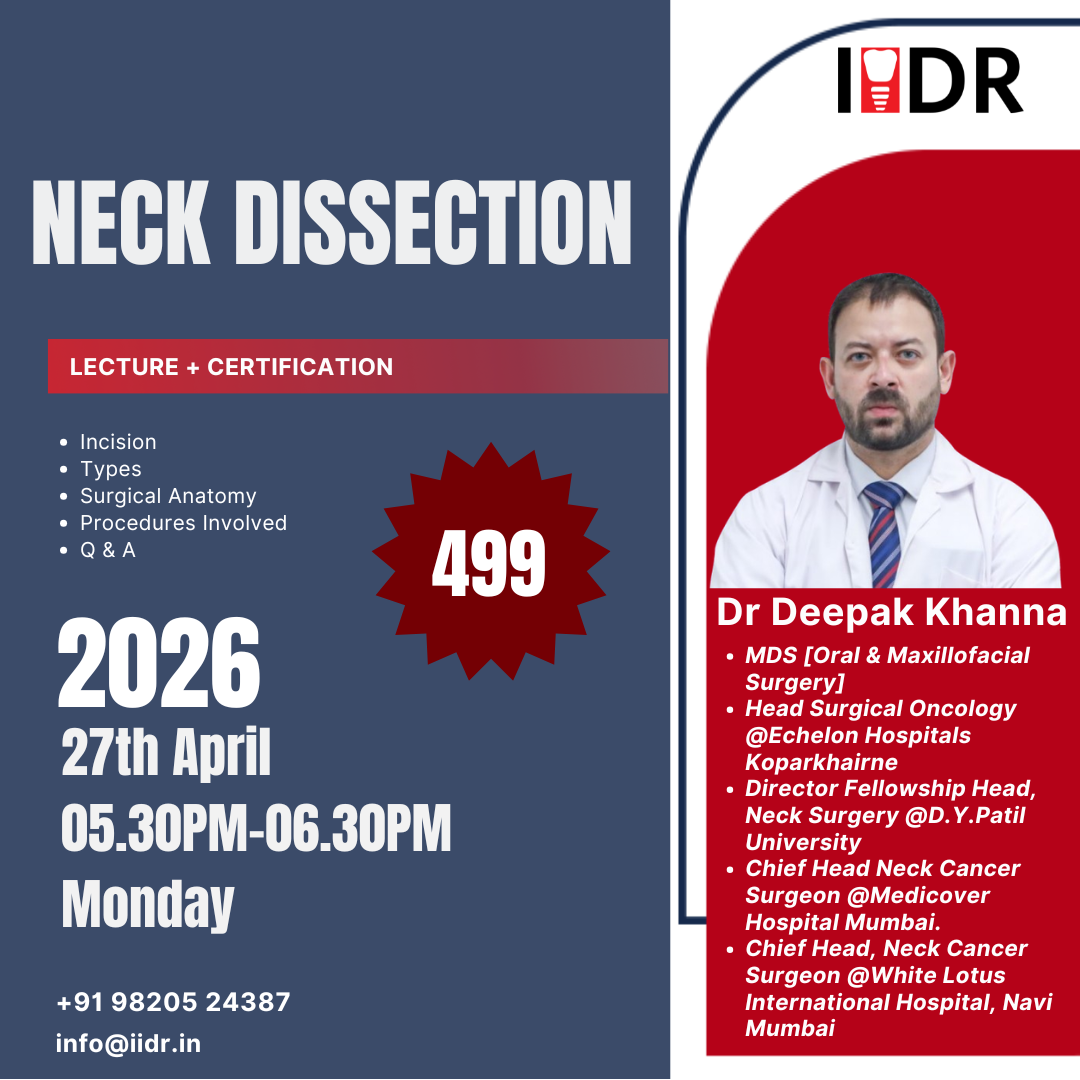
Join Dr Deepak Khanna on April 27th, 2026 at 5:30 PM for this insightful IIDR session focused on the surgical principles and clinical significance of neck dissection in head and neck oncology.
Curriculum
- 3 Sections
- 4 Lessons
- 2 Weeks
Instructor

FAQs
Requirements
- Fundamental understanding of oral anatomy and head & neck structures
- The webinar is suitable for beginners as well as clinicians interested in surgical oncology concepts
- Interest in oral surgery, oncology, and head & neck disease management
- Laptop, tablet, or smartphone with audio capability
Features
- Clear explanation of cervical lymph node levels and lymphatic drainage
- Understanding the role of neck dissection in head and neck cancer management
- Overview of radical, modified, and selective neck dissection procedures
- Principles guiding treatment decisions and cancer staging
- Understanding important nerves and vessels involved in surgery
- Managing functional outcomes and rehabilitation considerations
- Clinical examples to improve understanding of surgical decision-making
Target audiences
- Academicians and Researchers involved in oral oncology and surgical education
- Oral and Maxillofacial Surgeons interested in head and neck oncology procedures
- General Dental Practitioners seeking to understand surgical management of oral cancers
- Postgraduate Students (MDS) in Oral Surgery, Oral Medicine, and Oral Pathology
- Dental Interns & Final-Year BDS Students building knowledge of head and neck surgery
- Clinicians interested in multidisciplinary cancer management
Course Features
- Lectures 4
- Quiz 1
- Duration 2 weeks
- Skill level All levels
- Language English
- Students 30
- Certificate No
- Assessments Yes