
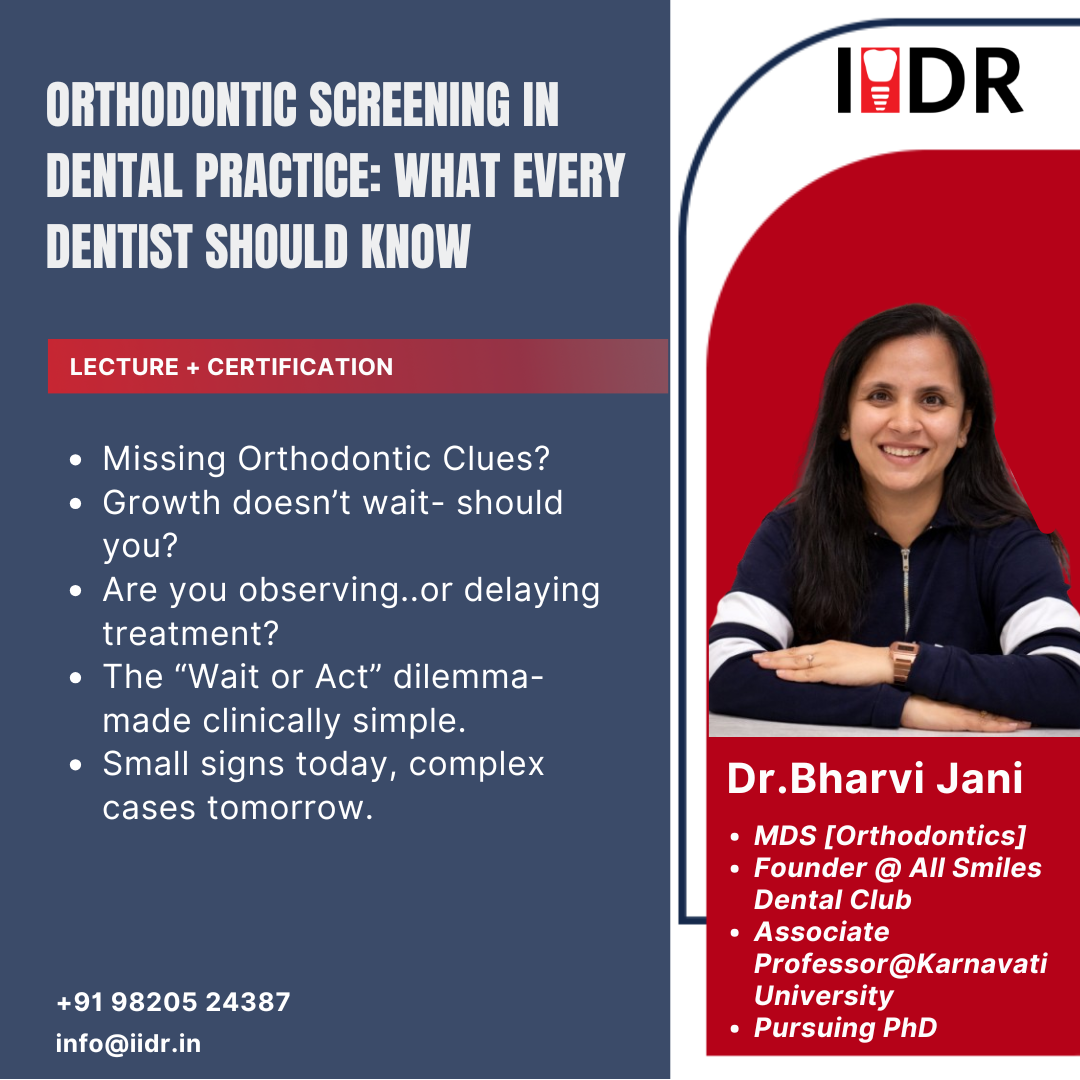
Orthodontic Screening in Dental Practice: What Every Dentist Should Know?
Orthodontic screening is a fundamental component of comprehensive dental care; therefore, it plays a crucial role in early detection, timely intervention, and improved treatment outcomes. In today’s preventive-focused practice, identifying orthodontic concerns at the right stage is no longer optional—it …
Overview
Orthodontic screening is a fundamental component of comprehensive dental care; therefore, it plays a crucial role in early detection, timely intervention, and improved treatment outcomes. In today’s preventive-focused practice, identifying orthodontic concerns at the right stage is no longer optional—it is essential.
Beyond recognizing obvious malocclusions, effective screening is systematic; therefore, it involves evaluating facial growth patterns, dental development, occlusion, and oral habits. When early signs are overlooked, treatment can become more complex—when identified early, interventions are simpler, more effective, and often preventive in nature.
This lecture explains the fundamentals of orthodontic screening; consequently, it helps clinicians understand how to identify, assess, and document orthodontic problems during routine dental examinations. It highlights key clinical markers and red flags that should not be missed in daily practice.
It emphasizes age-wise screening protocols, growth assessment, and referral timing; meanwhile, it addresses common misconceptions and limitations in general practice. Participants therefore gain clarity on when to monitor, when to intervene, and when to refer.
This session on IIDR also demonstrates how effective screening improves interdisciplinary treatment planning, enhances patient awareness, and builds trust—while ensuring timely and appropriate care.
Through clinical examples and practical insights, this session builds confidence in incorporating orthodontic screening into everyday dental practice. Therefore, it empowers clinicians to move from reactive treatment to proactive patient management.
Key Takeaways:
- Understanding the importance of early orthodontic screening
- Identifying key clinical signs and red flags
- Age-wise screening protocols and growth assessment
- Deciding when to monitor, intervene, or refer
- Role of oral habits and their impact on occlusion
- Improving interdisciplinary treatment planning
- Enhancing patient communication and awareness
Join Dr Bharvi Jani for this insightful IIDR session designed to help clinicians integrate effective orthodontic screening into routine dental practice.
Curriculum
- 3 Sections
- 4 Lessons
- 2 Weeks
Instructor

FAQs
Requirements
- Basic understanding of dental anatomy, occlusion, and tooth development is recommended
- Suitable for general dentists involved in routine patient examinations
- Familiarity with clinical examination and dental records is beneficial
- Basic knowledge of growth and development concepts can enhance understanding
- Ideal for clinicians interested in preventive and interceptive orthodontics
- Willingness to incorporate screening protocols into routine practice is essential
- Openness to interdisciplinary collaboration and timely referrals improves outcomes
Features
- Focused approach to integrating orthodontic screening into routine dental practice
- Emphasis on early detection and preventive orthodontic care
- Step-by-step guidance on clinical examination and identifying red flags
- Age-wise screening protocols and growth assessment insights
- Practical clarity on when to monitor, intervene, or refer
- Case-based discussions to enhance clinical decision-making
- Common mistakes and missed signs in everyday practice
- Strategies to improve patient communication and awareness
- Interdisciplinary perspective for comprehensive treatment planning
Target audiences
- General dentists looking to incorporate orthodontic screening into routine practice
- Early-career dentists seeking clarity on diagnosis and referral timing
- Practicing clinicians aiming to improve early detection of malocclusions
- Pediatric dentists focused on growth monitoring and preventive care
- Clinicians interested in interceptive orthodontics and habit management
- Dental professionals involved in comprehensive treatment planning
- Interns and postgraduate students seeking practical, case-based learning
You May Like

Orthodontics in the Era of Artificial Intelligence: Where Does Human Judgement Still Matter?
Artificial Intelligence (AI) is rapidly transforming the field of orthodontics by enhancing diagnosis, treatment planning, workflow efficiency, and patient communication. However, while AI offers precision...

Temporary Anchorage Devices in Orthodontics
Orthodontic treatment often involves the application of controlled forces to move teeth into their desired positions. However, the efficiency and direction of these movements depend...

Aligner Alchemy Demystified
Orthodontic treatment has evolved significantly over the years, with clear aligner therapy emerging as a revolutionary alternative to traditional braces. Popularized for their aesthetic appeal,...
Orthodontic Diagnosis: Orthodontics beyond wire bending
This webinar with Dr Bharvi Jani explores the fundamentals of accurate orthodontic diagnosis, emphasizing comprehensive treatment planning over traditional wire bending. It covers essential topics...

Braces Vs Aligners
Braces and aligners are both orthodontic devices used to straighten teeth and correct bite issues, but they work in different ways. Braces consist of metal...
Course Features
- Lectures 4
- Quiz 1
- Duration 2 weeks
- Skill level All levels
- Language English
- Students 26
- Certificate No
- Assessments Yes