
Peri-Implantitis
Peri-implantitis is a site-specific, plaque-associated pathological condition occurring in the tissues around dental implants, characterized by inflammation in the peri-implant mucosa and progressive loss of supporting bone. It is a major biological complication that can jeopardize the long-term success of …
Overview
Peri-implantitis is a site-specific, plaque-associated pathological condition occurring in the tissues around dental implants, characterized by inflammation in the peri-implant mucosa and progressive loss of supporting bone. It is a major biological complication that can jeopardize the long-term success of dental implants if not diagnosed and managed early.
Clinically, peri-implantitis presents with signs such as bleeding on probing, suppuration, increased probing depths, and radiographic evidence of bone loss around the implant. It often develops following peri-implant mucositis—an earlier, reversible stage where inflammation is confined to the soft tissues without bone loss.
The etiology of peri-implantitis is multifactorial. The primary contributing factor is microbial biofilm accumulation, but systemic factors like uncontrolled diabetes, smoking, genetic predisposition, and a history of periodontitis significantly increase the risk. Prosthetic factors, such as poor design leading to inadequate hygiene access, residual cement, and occlusal overload, can also contribute to disease progression.
Histologically, peri-implantitis lesions resemble those found in periodontitis but tend to be more aggressive, with a higher proportion of inflammatory infiltrates and faster bone loss due to the absence of periodontal ligament and differences in tissue vascularity around implants.
Management of peri-implantitis remains a clinical challenge. Treatment strategies involve mechanical debridement, antiseptic and antibiotic therapies, and surgical interventions aimed at decontaminating implant surfaces and regenerating lost bone. Laser therapy and photodynamic therapy are also being explored as adjunctive treatments. However, the predictability of treatment outcomes varies depending on the extent of the disease and implant surface characteristics.
Preventive care is crucial. Regular maintenance visits, strict plaque control, patient education, and early diagnosis through radiographic and clinical monitoring play vital roles in minimizing the risk and severity of peri-implantitis.
As the use of dental implants continues to rise globally, understanding peri-implantitis is essential for clinicians to ensure long-term implant health and patient satisfaction.
Learn all these concepts with IIDR on our expert talk with Dr Neha Joshi Raina. Register for yourself and upskill with online dental education.
Curriculum
- 2 Sections
- 1 Lesson
- 10 Weeks
- Webinar1 Item
- Quiz1 Item
Instructor

FAQs
Requirements
- BDS or equivalent dental degree (final-year students may also attend).
- Practicing dentists and specialists (Periodontists, Prosthodontists, Oral Surgeons) are encouraged.
- Understanding of dental implants and peri-implant soft tissue anatomy.
- Familiarity with periodontal diseases will enhance comprehension.
- A laptop, desktop, or tablet with a stable internet connection.
- Review any existing implant cases or radiographs from your own practice for post-session discussions.
Features
- Covers etiology, risk factors, diagnosis, and classification of peri-implantitis with evidence-based insights.
- In-depth discussion on early detection, maintenance protocols, and current treatment modalities—both surgical and non-surgical.
- Live Q&A with the speaker to clarify clinical doubts and discuss practical concerns in peri-implant care.
Target audiences
- General Dentists
- Periodontists
- Prosthodontists & Oral Surgeons
- Postgraduate Students & Interns
- Implantology Practitioners
- Academicians & Researchers
You May Like
Implantology 1.0- The Essential Blueprint for Beginners

Step confidently into the world of dental implants with Implantology 1.0 – The Essential Blueprint for Beginners, a foundational program designed for clinicians beginning their...

Dentists Induction Training Program

Starting a new role as a dentist in a clinical practice involves more than just clinical knowledge—it requires adapting to the clinic’s workflows, treatment standards,...
Saliva as a Diagnostic Tool for Oral and Systemic Disease

Saliva as a Diagnostic Tool for Oral and Systemic Disease represents a paradigm shift from invasive testing to chairside, non-invasive diagnostics; therefore, it directly influences...

Dental Sleep Medicine: Bridging Dentistry with Sleep Science

Dental Sleep Medicine represents a crucial expansion of modern dental practice beyond teeth and occlusion; therefore, it directly influences sleep quality, systemic health, airway stability,...
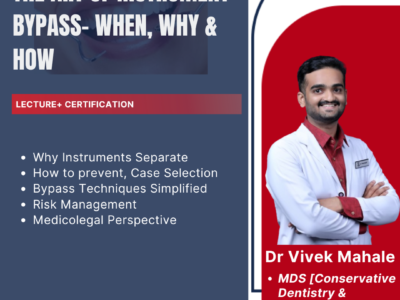
The Art of Instrument Bypass- When, Why and How
Instrument bypass is a critical skill in endodontics that can often mean the difference between saving a tooth and referring or extracting it. It is...
Course Features
- Lecture 1
- Quiz 1
- Duration 10 weeks
- Skill level All levels
- Language English
- Students 10
- Certificate Yes
- Assessments Yes