
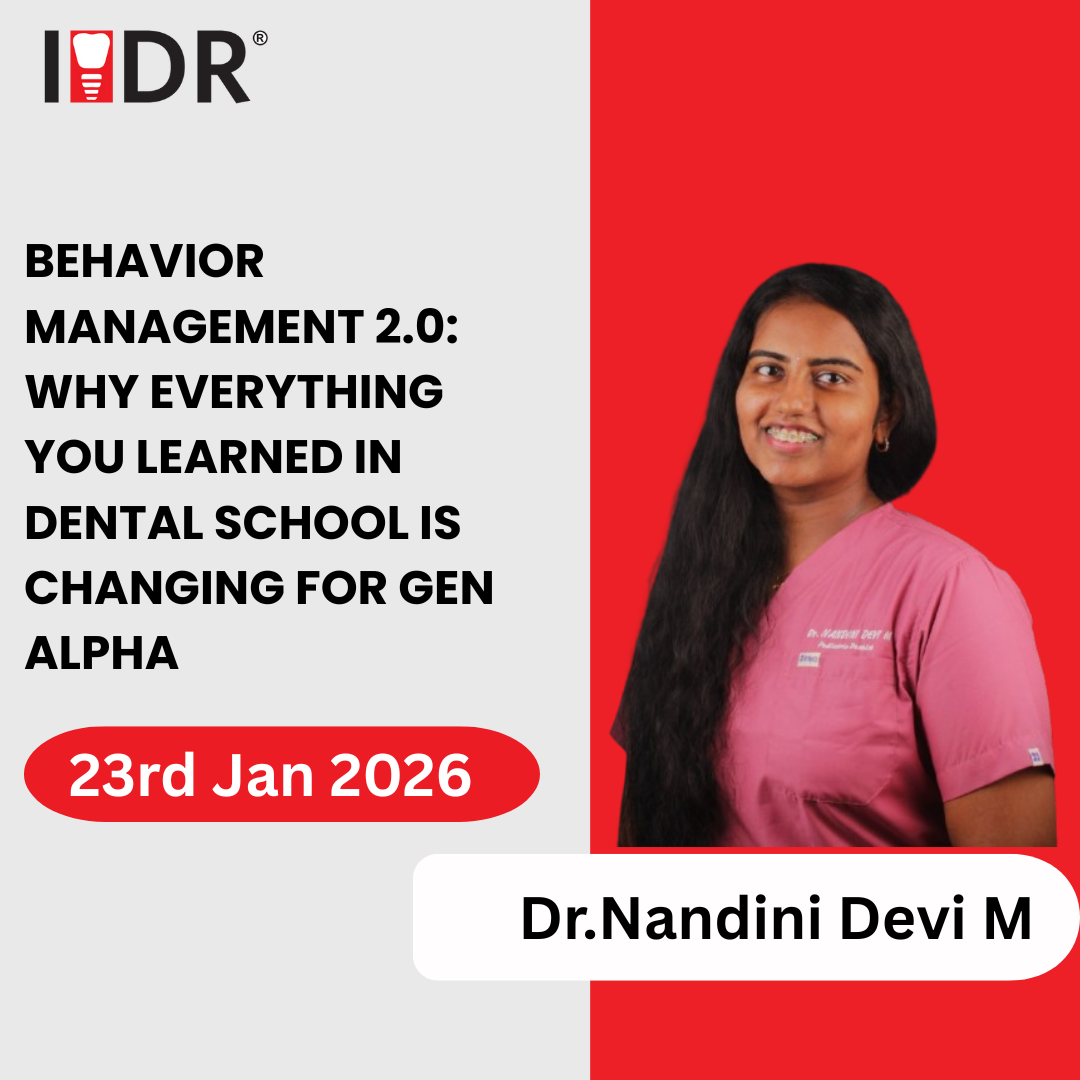
Behavior Management 2.0: Why Everything You Learned in Dental School is Changing for Gen Alpha
Behavior management is no longer limited to tell–show–do or basic communication techniques taught in dental school. With Gen Alpha, behavior, attention spans, anxiety triggers, and parental expectations have changed; therefore, traditional approaches are often ineffective. Beyond a chairside skill, modern …
Overview
Behavior management is no longer limited to tell–show–do or basic communication techniques taught in dental school. With Gen Alpha, behavior, attention spans, anxiety triggers, and parental expectations have changed; therefore, traditional approaches are often ineffective.
Beyond a chairside skill, modern behavior management is a strategic clinical competency; therefore, it directly affects cooperation, outcomes, workflow, and patient loyalty.
It explains why Gen Alpha behaves differently; consequently, it highlights how digital influence and parenting styles limit traditional methods. It further emphasizes age-appropriate communication, comfort-focused settings, emotional regulation, and parent–child management.
Participants will learn structured, practical protocols to manage anxiety, resistance, screen dependency, and emotional dysregulation—without escalating to forceful or outdated methods. The session also explains how adapting behavior management improves clinical efficiency, reduces stress, and enhances patient trust.
Through real-world cases and evidence-based principles, this session helps clinicians shift from outdated methods to confident, modern behavior management.
This program directly addresses challenges such as uncooperative Gen Alpha patients, parental interference, reduced attention spans, heightened anxiety, and clinician burnout—offering clear, ethical, and practical solutions for daily practice.
Key Takeaways:
- Why traditional behavior management techniques are failing with Gen Alpha
- Understanding the psychology, environment, and parenting patterns of Gen Alpha
- When to modify communication, consent, and control strategies
- Step-by-step protocols for managing anxiety, resistance, and screen dependency
- Handling parents as active stakeholders in behavior management
- Creating a stress-reduced, child-friendly clinical workflow
- Integrating modern behavior management into routine pediatric dental practice
Join Dr Nandini Devi M on January 23rd, 2026, for this focused session designed to upgrade your behavioral decision-making and chairside confidence in today’s pediatric dental landscape on IIDR.
Enroll with IIDR to master Behavior Management 2.0—because in modern dentistry, understanding behavior is as critical as mastering technique.
Curriculum
- 3 Sections
- 4 Lessons
- 10 Weeks
Instructor

FAQs
Requirements
- Prior experience in treating pediatric or adolescent patients in dental practice or training.
- Understanding of routine pediatric dental procedures and chairside interactions.
- Willingness to re-evaluate behavior management techniques learned in dental school.
- A keen interest in understanding child behavior, emotional responses, and parent–child dynamics.
- The session is lecture-based and protocol-driven; no hands-on instruments are required.
- Stable internet connection
Features
- Understanding Gen Alpha psychology and behavioral patterns
- Why traditional behavior management techniques are failing
- Practical, chairside-ready behavior management protocols
- Managing screen dependency, anxiety, and emotional dysregulation
- Strategies to handle parents as active participants
- Stress-reducing methods for smoother appointments
Target audiences
- Pediatric dentists
- General dental practitioners treating children
- Postgraduate students and interns
- Faculty involved in pediatric and preventive dentistry
- Clinicians facing increasing chairside behavior challenges with children and parents
You May Like

Extracoronal Restorations in Primary Teeth
Restoring primary teeth affected by extensive caries is a critical aspect of pediatric dental practice. When extracoronal restorations are no longer sufficient, extracoronal restorations provide...


Fix Before Six: Rewiring Oral Habits to Shape Airway, Sleep & Growth
Clinicians often overlook oral habits in early childhood; however, these habits strongly influence craniofacial development, airway health, and sleep quality. Therefore, identifying and correcting these...


Space Maintainers in Pedodontics
Maintaining space after premature tooth loss is crucial for ensuring proper alignment and eruption of permanent teeth. Moreover, space maintainers, though simple in design, are...


Apexogenesis & Apexification
The management of immature permanent teeth presents one of the most delicate challenges in endodontics. When trauma or deep caries arrests normal root development, clinicians...


Minimally Invasive Pediatric Dentistry in General Practice: What you can treat & when to refer
Pediatric dentistry doesn’t always have to be complex or intimidating. With proper knowledge of minimally invasive techniques, general dentists can manage most pediatric cases effectively,...
Course Features
- Lectures 4
- Quiz 1
- Duration 10 weeks
- Skill level All levels
- Language English
- Students 27
- Certificate No
- Assessments Yes