
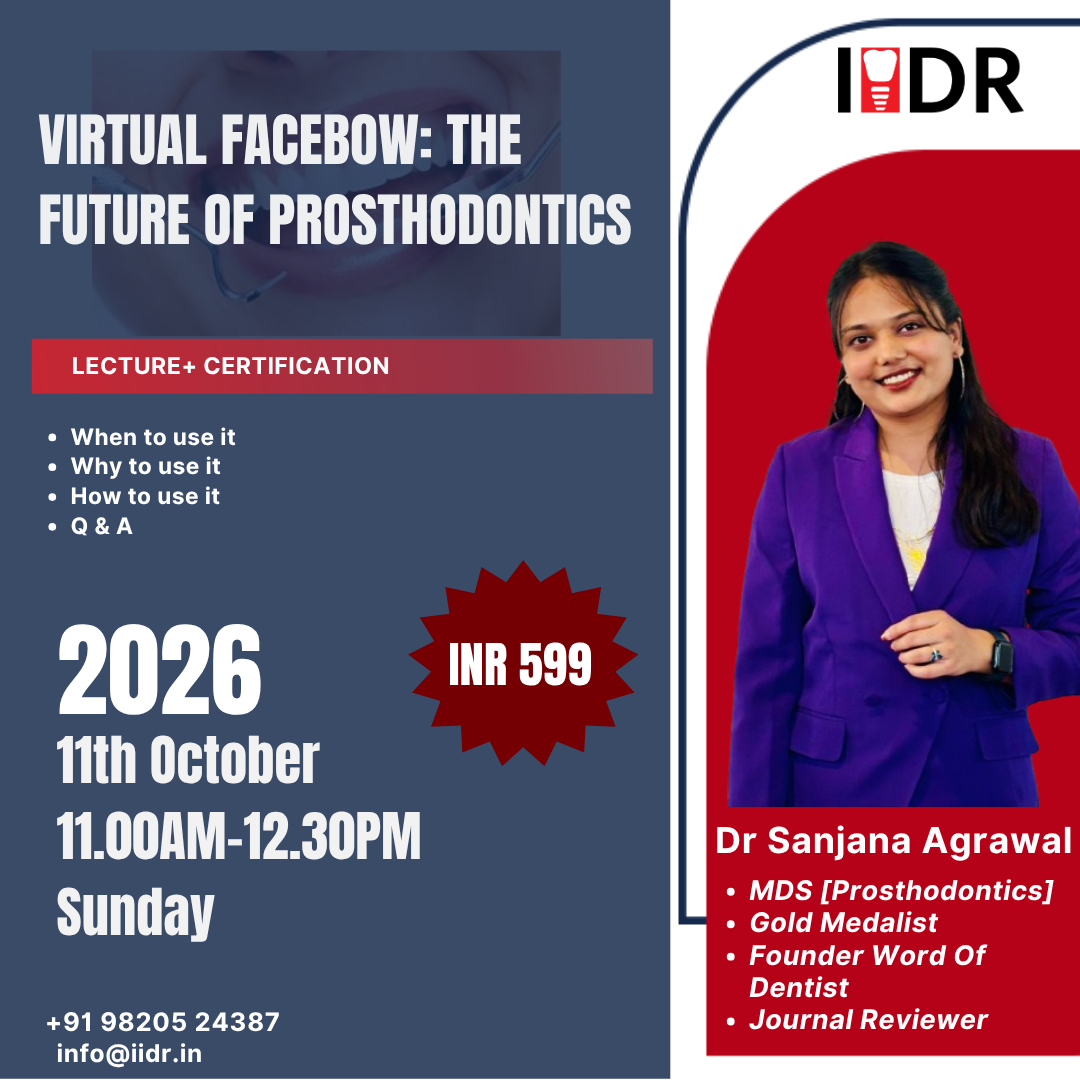
Virtual Facebow: The Future of Prosthodontics
The evolution of digital dentistry is transforming the way prosthodontic diagnosis, treatment planning, and rehabilitation are approached. One of the most exciting developments in this field is the Virtual Facebow, which offers a digital alternative to conventional facebow procedures and …
Overview
The evolution of digital dentistry is transforming the way prosthodontic diagnosis, treatment planning, and rehabilitation are approached. One of the most exciting developments in this field is the Virtual Facebow, which offers a digital alternative to conventional facebow procedures and opens new possibilities for accurate, efficient, and predictable prosthodontic workflows.
Moreover this online lecture on IIDR, Dr. Sanjana Agrawal will take participants through the fundamentals of the Virtual Facebow and its relevance in contemporary prosthodontics. This session will explore how digital facial scanning, intraoral scanning, jaw relation records, and virtual articulation can be integrated to reproduce the patient’s maxillomandibular relationship within a digital environment.
However lecture will focus on the clinical application of Virtual Facebow technology, helping dentists understand where it can add value in restorative and prosthodontic treatment. However, participants will also gain insights into how digital workflows can improve communication between the clinician, laboratory, and patient while enhancing treatment planning and predictability.
What You Will Learn:
- Understand the principles and concept behind the Virtual Facebow
- Compare conventional facebow techniques with modern digital alternatives
- Explore different methods of digitally capturing facial and maxillomandibular relationships
- Understand the role of facial scanning and intraoral scanning in virtual articulation
- Learn how to integrate the Virtual Facebow into a digital prosthodontic workflow
- Explore clinical applications in fixed and restorative prosthodontics
- Understand the benefits of virtual articulation for diagnosis and treatment planning
- Identify potential sources of error and limitations in digital jaw registration
- Improve communication and collaboration between the dentist and dental laboratory
- Understand how Virtual Facebow technology can contribute to more predictable and efficient prosthodontic outcomes
Who Should Attend?
Finally this lecture is ideal for general dentists, prosthodontists, restorative dentists, and clinicians interested in incorporating digital dentistry into their practice.
Join Dr. Sanjana Agrawal at IIDR , for an insightful online lecture on “Virtual Facebow: The Future of Prosthodontics” and discover how digital technology is redefining conventional prosthodontic workflows.
Curriculum
- 3 Sections
- 4 Lessons
- 2 Weeks
- Introduction2 Items
- About the Event2 Items
- Quiz1 Item
Instructor

FAQs
Requirements
- Laptop, desktop, tablet, or smartphone with a stable internet connection
- Working audio/speakers to hear the lecture clearly
- Zoho Meeting access/link provided by IIDR
- Updated web browser or Zoho Meeting application, as applicable
- Notebook and pen for taking clinical notes
- Basic understanding of prosthodontic principles and digital dentistry is recommended
Features
- Clear understanding of Virtual Facebow concepts and principles
- Conventional vs. virtual facebow – understanding the evolution of the technique
- Step-by-step overview of the digital facebow workflow
- Integration of facial scanning, intraoral scanning & virtual articulation
- Clinical applications in restorative and prosthodontic treatment
- Understanding accuracy, predictability, and efficiency of digital workflows
- Discussion of common errors, limitations, and clinical challenges
Target audiences
- General Dental Practitioners
- Prosthodontists
- Restorative & Aesthetic Dentists
- Postgraduate Students in Prosthodontics
- Implant Dentists
- Digital Dentistry Practitioners
- Dental Clinicians interested in CAD/CAM and digital workflows
- Dental Laboratory Professionals involved in digital prosthodontics
You May Like
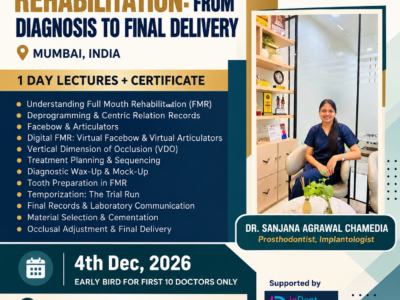
Mastering Full Mouth Rehabilitation: From Diagnosis to Final Delivery (1 Day Lecture)
Full Mouth Rehabilitation (FMR) requires a systematic approach to diagnosis, occlusal analysis, and treatment planning. It also involves precise restorative execution. Therefore, clinicians must carefully...
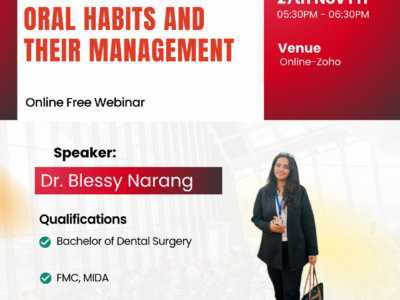
Oral Habits and Their Management

Oral habits such as thumb sucking, tongue thrusting, mouth breathing, lip biting, and prolonged pacifier use can influence dental development and occlusion, particularly during childhood....
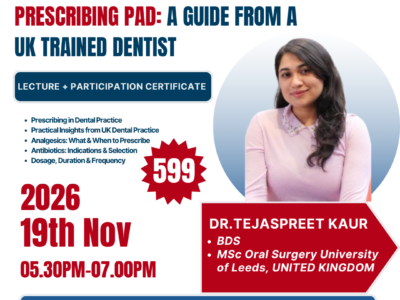
Journey from Surgery to a Prescribing Pad: A Guide from a UK-Trained Dentist

Journey from Surgery to a Prescribing Pad is how prescribing is an important part of post-operative dental care. Choosing the prescription drug, dose, duration, and...
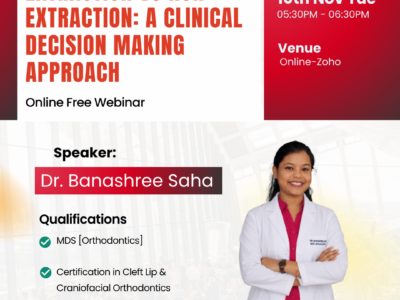
Extraction Vs Non-Extraction: A Clinical Decision Making Approach

Orthodontic treatment planning often requires a careful decision between extraction and non-extraction approaches. The choice depends on factors such as crowding, facial profile, arch dimensions,...
The New Era of Pediatric Dentistry: Advances in Crowns, Preformed Space Maintainers, and Prevention

Pediatric dentistry continues to evolve with advances in restorative materials, prefabricated treatment options, and preventive strategies that help clinicians provide more predictable and child-friendly care....
Course Features
- Lectures 4
- Quiz 1
- Duration 2 weeks
- Skill level All levels
- Language English
- Students 35
- Certificate No
- Assessments Yes