
A Beginner’s Guide to Clinical Photography
Clinical dental photography has become an essential part of modern dental practice; therefore, it plays a crucial role in diagnosis, treatment planning, documentation, and patient communication. In today’s visually driven and digitally evolving landscape, photography is no longer optional—it is …
Overview
Clinical dental photography has become an essential part of modern dental practice; therefore, it plays a crucial role in diagnosis, treatment planning, documentation, and patient communication. In today’s visually driven and digitally evolving landscape, photography is no longer optional—it is a fundamental clinical skill.
Dental photography is not just about taking pictures; instead, it requires a structured approach involving proper equipment, standardized protocols, and consistent techniques. Therefore, understanding camera settings, lighting, and patient positioning is key. In addition, maintaining uniformity in images ensures accurate records and better case comparison.
Without proper technique, images can be inconsistent and clinically unreliable. However, when done systematically, clinical photography provides clear, high-quality documentation and enhances case presentation.
This lecture explains the fundamentals of clinical dental photography; consequently, it clarifies how to capture standardized images for diagnosis, communication, and documentation. It highlights the importance of camera selection, lenses, lighting systems, and basic settings.
It emphasizes framing, positioning, intraoral and extraoral views, and infection control protocols; meanwhile, it also addresses common mistakes, troubleshooting, and workflow efficiency. Participants therefore gain a practical understanding of capturing consistent and professional-quality images.
This IIDR session also demonstrates how photography improves patient communication, case acceptance, and medico-legal documentation—while enhancing practice branding and presentation.
Through step-by-step guidance and practical insights, this session builds clarity and confidence in clinical photography. Therefore, it empowers clinicians to incorporate photography seamlessly into everyday dental practice.
Key Takeaways:
- Understanding the fundamentals of clinical dental photography
- Importance of standardization and consistency in images
- Basics of camera, lenses, and lighting systems
- Step-by-step approach to intraoral and extraoral photography
- Common mistakes and how to avoid them
- Enhancing documentation, communication, and case presentation
- Integrating photography into daily clinical workflow
Join Dr. Dharani Soundrapandian on June 4th 2026 6pm for this insightful IIDR session designed to help clinicians confidently begin and refine their journey in clinical dental photography.
Curriculum
- 3 Sections
- 4 Lessons
- 90 Minutes
- Introduction2 Items
- About the Event2 Items
- Quiz1 Item
Instructor

FAQs
Requirements
- BDS, MDS
- Participants should have a foundational understanding of dental anatomy and clinical procedures, as photography is applied in documentation, diagnosis, treatment planning, and patient communication.
- Digital Camera (Not Mandatory)
- Mobile Phone (Mandatory)
- Internet Access
- English Language Proficiency
- With an interest to upskill yourself with the latest dental photography techniques
Features
- Basics of Digital Camera
- Technical Settings Dental Accessories
- Master Guide for Success
- Q&A
Target audiences
- Dental Specialists (MDS)
- General Dentists
- Dental Students & Interns
- Dental Educators & Speakers
- Dental Clinic Owners & Marketing Teams
- Researchers & Authors
You May Like

Dentists Induction Training Program

Starting a new role as a dentist in a clinical practice involves more than just clinical knowledge—it requires adapting to the clinic’s workflows, treatment standards,...

Chewable Toothbrush- Oral hygiene on the move

Effective oral hygiene doesn’t always depend on traditional brushing techniques. The chewable toothbrush offers a practical, travel-friendly, and patient-compliant alternative that supports better plaque control...
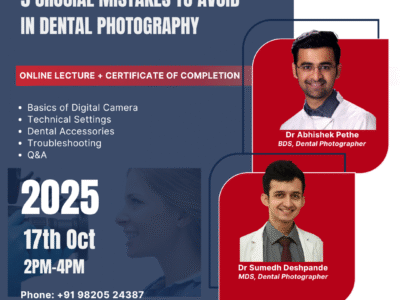
5 Crucial Mistakes To Avoid In Dental Photography

Dental photography is more than just taking clinical pictures — it’s a powerful tool for documentation, diagnosis, patient education, and professional growth. However, even skilled...

5 Signs Your Dental Practice Is Bleeding Money

Is your dental practice bleeding money? Running a dental practice isn’t just about delivering excellent patient care — it’s also about maintaining a healthy, profitable...
Dentists Training Program
Starting a new role as a dentist in a clinical practice involves more than just clinical knowledge—it requires adapting to the clinic’s workflows, treatment standards,...

Course Features
- Lectures 4
- Quiz 1
- Duration 90 minutes
- Skill level All levels
- Language English
- Students 27
- Certificate Yes
- Assessments Yes