
Growth Modulation Therapy
Growth modulation is no longer optional but a critical orthodontic strategy; therefore, it directly influences skeletal correction, facial harmony, and long-term stability. When timed correctly, it reduces the need for extractions, camouflage, or future surgery. Beyond appliance placement, growth modulation …
Overview
Growth modulation is no longer optional but a critical orthodontic strategy; therefore, it directly influences skeletal correction, facial harmony, and long-term stability. When timed correctly, it reduces the need for extractions, camouflage, or future surgery.
Beyond appliance placement, growth modulation is biologically driven; therefore, it depends on accurate growth assessment, precise timing, and sound clinical decisions.
This lecture explains craniofacial growth patterns and biological principles; consequently, it clarifies when growth modulation works, fails, and why incorrect timing compromises outcomes.
It emphasizes case selection, growth assessment, appliance choice, and force delivery; meanwhile, it highlights limitations and realistic expectations. Participants therefore learn step-by-step protocols to plan and execute growth guidance in Class II and Class III cases.. The session also explains how early, well-planned intervention improves treatment efficiency, facial aesthetics, and long-term stability.
Through case discussions and growth analysis, this session builds confident, evidence-based growth planning. Therefore, it addresses timing, case selection, and appliance misuse to improve reliable orthodontic outcomes.
Key Takeaways
- Biological principles behind craniofacial growth and change
- Identifying ideal timing and growth phases for intervention
- Case selection criteria for consistent growth modulation outcomes
- Choosing the right appliance for specific skeletal discrepancies
- Managing Class II and Class III malocclusions using growth modification
- Understanding limitations and avoiding common clinical failures
- Integrating growth modulation into comprehensive orthodontic treatment planning
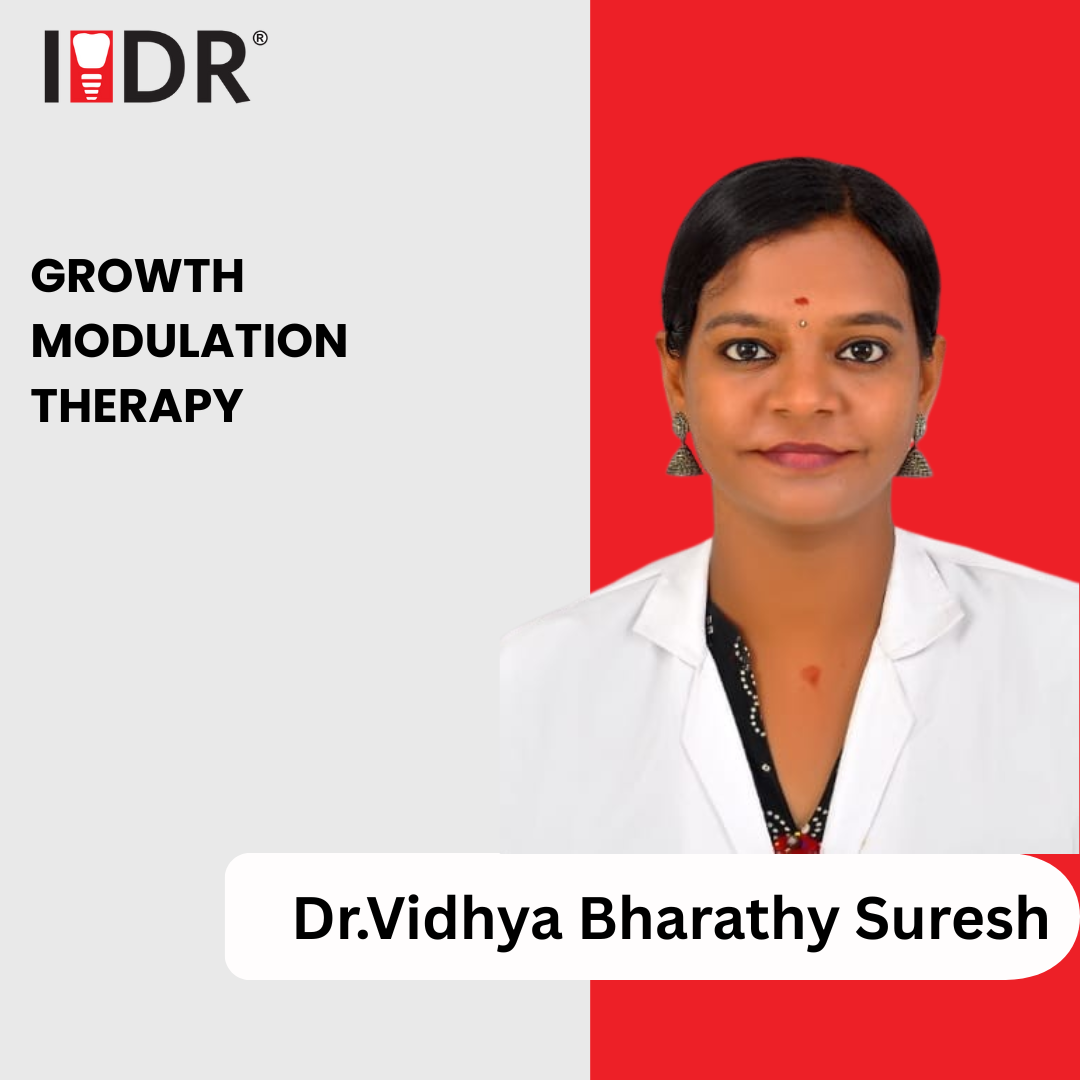
Join Dr Vidhya Bharathy Suresh on for this focused session designed to strengthen your diagnostic accuracy and clinical confidence in growth modulation therapy on IIDR.
Enroll with IIDR to master Growth Modulation Therapy—because in orthodontics, timing growth correctly defines long-term success.
Curriculum
- 3 Sections
- 4 Lessons
- 10 Weeks
- Introduction2 Items
- About the Event2 Items
- Quiz1 Item
Instructor

FAQs
Requirements
- Understanding of orthodontic terminology, malocclusion classification, and treatment objectives.
- Basic awareness of facial growth patterns and developmental stages in children and adolescents.
- Prior experience or observation of orthodontic cases involving growing patients is recommended.
- Ability to interpret clinical photographs, study models, and basic radiographic records (OPG, lateral cephalogram).
- Suitable for postgraduate students, interns, and practicing clinicians with an interest in interceptive orthodontics.
- This is a lecture-based session; no hands-on instruments or appliances are required.
- Stable internet connection and a device capable of viewing clinical cases and radiographs clearly.
Features
- Clear explanation of craniofacial growth principles and their clinical relevance.
- Identifying ideal growth phases and selecting suitable cases for predictable outcomes.
- Overview of commonly used growth modulation appliances and their indications.
- Use of clinical findings, radiographs, and growth indicators in treatment planning.
- Application of growth modulation in Class II and Class III cases.
- Understanding realistic expectations and boundaries of growth modification therapy.
- Structured content aligned with postgraduate exams and everyday clinical practice.
Target audiences
- Postgraduate students in Orthodontics and Dentofacial Orthopaedics
- Orthodontic residents and interns involved in treating growing patients
- Practicing orthodontists seeking to strengthen interceptive and growth modification strategies
- General dental practitioners with an interest in early orthodontic intervention
- Academic faculty involved in orthodontic teaching and clinical training
You May Like
Orthodontics in the Era of Artificial Intelligence: Where Does Human Judgement Still Matter?

Artificial Intelligence (AI) is rapidly transforming the field of orthodontics by enhancing diagnosis, treatment planning, workflow efficiency, and patient communication. However, while AI offers precision...

Dentists Induction Training Program

Starting a new role as a dentist in a clinical practice involves more than just clinical knowledge—it requires adapting to the clinic’s workflows, treatment standards,...
Orthodontic Screening in Dental Practice: What Every Dentist Should Know?

Orthodontic screening is a fundamental component of comprehensive dental care; therefore, it plays a crucial role in early detection, timely intervention, and improved treatment outcomes....

All About Dentures

All About Dentures provides a comprehensive understanding of one of the most fundamental yet technique-sensitive aspects of prosthodontic care; therefore, it directly influences function, aesthetics,...

Sleep, Growth and Airway: A Clinical Look at Pediatric Sleep-Disordered Breathing

Sleep Breathing Disorders in Children represent a critical yet often overlooked area of dental and medical care; therefore, they directly influence craniofacial growth, behavior, learning,...
Course Features
- Lectures 4
- Quiz 1
- Duration 10 weeks
- Skill level All levels
- Language English
- Students 64
- Certificate Yes
- Assessments Yes