
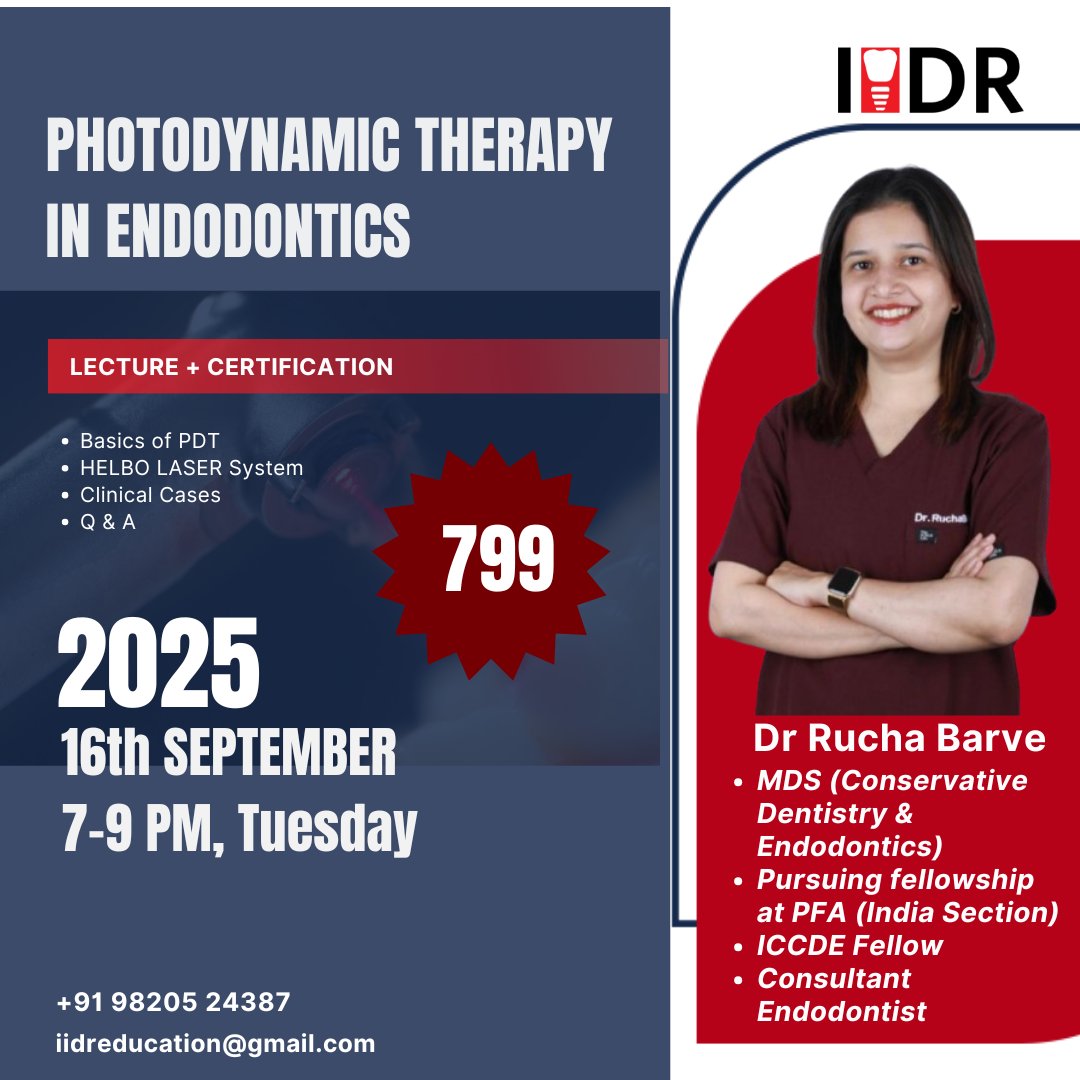
Photodynamic Therapy in Endodontics
Photodynamic Therapy (PDT) is a promising new technique in modern endodontics. It offers a minimally invasive and targeted way to disinfect root canals. Root canal infections are complex and difficult to eliminate. They often involve resistant polymicrobial biofilms. These biofilms …
Overview
Photodynamic Therapy (PDT) is a promising new technique in modern endodontics. It offers a minimally invasive and targeted way to disinfect root canals. Root canal infections are complex and difficult to eliminate. They often involve resistant polymicrobial biofilms. These biofilms hide in hard-to-reach areas like isthmuses, lateral canals, and dentinal tubules. Traditional irrigation and instrumentation, while essential, have limitations in fully eradicating these pathogens.
Uses:
In endodontics, PDT is typically applied after routine mechanical debridement. When a specific light source—usually in the red or near-infrared range—exposes the photosensitizer, it activates and generates singlet oxygen along with free radicals. These reactive species attack the bacterial membrane and intracellular components, resulting in cell death. Importantly, PDT works independently of antibiotic resistance mechanisms, making it highly relevant in the era of rising antimicrobial resistance.
Target Organism & Benefits:
Photodynamic therapy is particularly effective against Enterococcus faecalis, a common and species in endodontic failures. It enhances the success rate of root canal therapy by reducing bacterial load, improving healing outcomes, and potentially reducing postoperative complications. However this technique is safe, repeatable, and patient-friendly, with minimal adverse effects.
However, this modality is also gaining attention for its application in regenerative endodontics, a sterile environment is crucial for successful tissue regeneration. Using PDT into clinical protocols may lead to better disinfection, improved clinical outcomes, and longer-lasting endodontic treatments.
As research continues to evolve, PDT is expected to be a standard of care in endodontic disinfection protocols. Therefore its also used in retreatment cases and regenerative procedures. Dentists who use this advanced technology stay ahead in modern endodontics. They provide safer, more effective, and biologically friendly treatment for their patients.
Enroll today for your seat for this session with IIDR
Curriculum
- 1 Section
- 1 Lesson
- 5 Days
Instructor

FAQs
Requirements
- BDS (Bachelor of Dental Surgery) or equivalent degree.
- MDS (Master of Dental Surgery) in Conservative Dentistry & Endodontics is preferred but not mandatory.
- Interns and postgraduate students in Endodontics with a keen interest in clinical innovation may also enroll.
Features
- In-depth exploration of the science behind PDT and its mechanism of action in microbial disinfection.
- Review of current literature, clinical studies, and success rates related to PDT in endodontics.
- Step-by-step integration of PDT into routine root canal procedures.
- Specific protocols for primary treatment, retreatment, and regenerative endodontic cases
- Detailed guidance on choosing the right light source and photosensitizing agents.
Target audiences
- General Dentists (BDS)
- Endodontists (MDS in Conservative Dentistry & Endodontics)
- Postgraduate Students (MDS)
- Interns and Recent Graduates
- Dental Educators and Researchers
You May Like
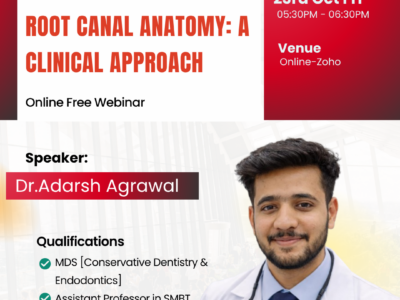

Mastering Challenging Root Canal Anatomy: A Clinical Approach
Root canal treatment becomes significantly more challenging when clinicians encounter complex and unpredictable canal anatomy. Missed canals, calcified canals, severe curvatures, narrow canals, anatomical variations,...
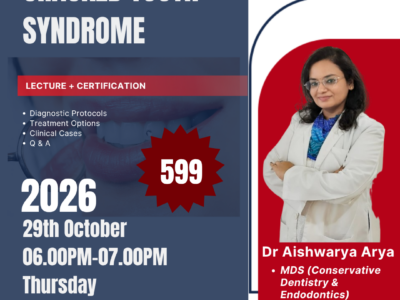

Cracked Tooth Syndrome
Cracked Tooth Syndrome can present as one of the most challenging diagnostic dilemmas in everyday dental practice. Patients may report intermittent pain, sensitivity to biting...
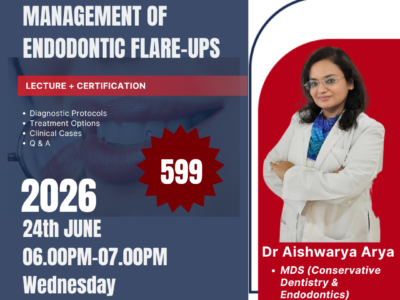
Prevention & Management of Endodontic Flare-Ups
Endodontic flare-ups are among the most challenging complications in clinical practice. Therefore, understanding their prevention and management is essential for every clinician. These unexpected episodes...


Dentists Induction Training Program
Starting a new role as a dentist in a clinical practice involves more than just clinical knowledge—it requires adapting to the clinic’s workflows, treatment standards,...
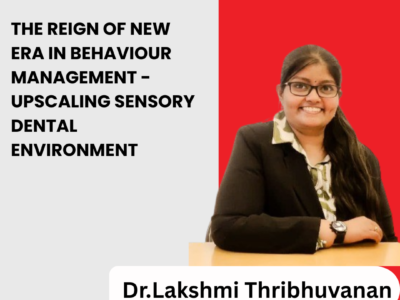

The Reign of New Era in Behavior Management – Upscaling Sensory Dental Environment
The Reign of a New Era in Behavior Management – Upscaling the Sensory Dental Environment marks a fundamental shift in how dental care is delivered;...
Course Features
- Lecture 1
- Quiz 0
- Duration 5 days
- Skill level All levels
- Language English
- Students 148
- Certificate No
- Assessments Yes