
The Reign of New Era in Behavior Management – Upscaling Sensory Dental Environment
The Reign of a New Era in Behavior Management – Upscaling the Sensory Dental Environment marks a fundamental shift in how dental care is delivered; therefore, it directly impacts patient cooperation, anxiety reduction, clinical efficiency, and long-term trust. In today’s …
Overview
The Reign of a New Era in Behavior Management – Upscaling the Sensory Dental Environment marks a fundamental shift in how dental care is delivered; therefore, it directly impacts patient cooperation, anxiety reduction, clinical efficiency, and long-term trust. In today’s practice, managing behavior is no longer about control—but about creating an environment that supports regulation, comfort, and safety.
Beyond traditional tell–show–do techniques, modern behavior management is sensory-driven; therefore, it depends on understanding neurodiversity, sensory processing, and emotional regulation. Sound clinical decisions now integrate environmental design, sensory modulation, and communication strategies tailored to individual patient needs.
This lecture explains the science of sensory perception and behavior. Why conventional approaches fail for many children and special care patients. It also highlights how sensory overload affects cooperation and treatment outcomes.
It emphasizes operatory design, lighting, sound, visual cues, tactile inputs, and chairside communication; meanwhile, it highlights realistic adaptations that can be implemented in routine dental clinics. Participants therefore learn step-by-step protocols to transform a conventional operatory into a sensory-supportive dental environment.
The session also demonstrates how a well-planned sensory dental setup improves appointment flow, reduces chairside stress, minimizes restraint or pharmacological intervention, and enhances patient and parent satisfaction.
Through case discussions and practical examples, this session builds confidence in applying sensory-based behaviour management strategies. Therefore, it empowers clinicians to manage anxious, pediatric, and neurodiverse patients more effectively while improving overall clinical outcomes.
Key Takeaways
-
Understanding sensory processing and its role in dental behaviour
-
Why traditional behaviour management often fails in today’s patient population
-
Designing a sensory-supportive dental operatory with practical, affordable modifications
-
Managing anxiety, fear, and uncooperative behavior through environmental control
-
Behaviour guidance strategies for pediatric and neurodiverse patients
-
Reducing reliance on restraint and pharmacological behaviour management
-
Integrating sensory dentistry into everyday clinical practice
Because the future of dentistry belongs to clinicians who adapt environments—not just patients.
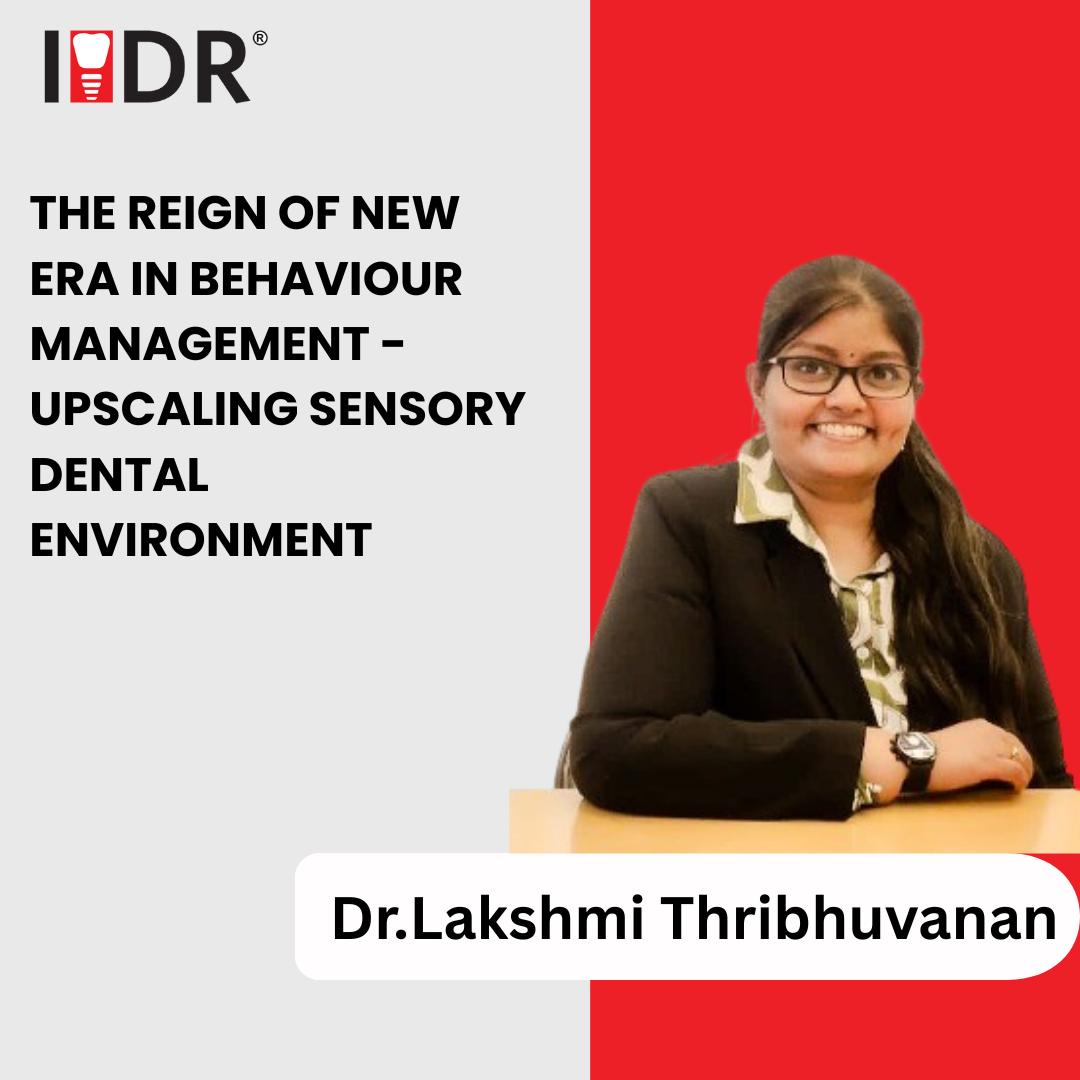
Join us on IIDR for The Reign of a New Era in Behaviour Management – Upscaling the Sensory Dental Environment, by Dr.Lakshmi Thribhuvanan a focused session designed to help clinicians confidently manage anxious, pediatric, and neurodiverse patients through sensory-based dental care strategies.
Curriculum
- 3 Sections
- 4 Lessons
- 10 Weeks
Instructor

FAQs
Requirements
- BDS, MDS, or equivalent dental qualification
- Dental interns and final-year BDS students are welcome
- Basic exposure to pediatric or general dental practice
- Prior experience with anxious or uncooperative patients is helpful but not mandatory
- Interest in modern behaviour management, sensory dentistry, and patient-centered care
- Willingness to rethink traditional behaviour guidance approaches
- Stable internet connection
- Laptop, tablet, or smartphone with audio/video capability
- Access to Zoom
Features
- Understand the neurological and sensory basis of dental anxiety and behaviour
- Learn simple, immediately applicable strategies for everyday clinical practice
- Guidance on lighting, sound, visuals, and tactile inputs to create a calming dental environment
- Modern behaviour management approaches suited for today’s pediatric and neurodiverse patients
- Real clinical scenarios demonstrating successful sensory-based behaviour management
- Learn how to minimize pharmacological and restrictive techniques through environment control
- Build trust, reduce fear, and increase cooperation through compassionate care
Target audiences
- General Dental Practitioners managing anxious, fearful, or uncooperative patients
- Pediatric Dentists treating children with anxiety, sensory sensitivities, or developmental challenges
- Postgraduate Students (MDS) in Pediatric Dentistry, Orthodontics, Oral Medicine, and Public Health Dentistry
- Dental Interns and Final-Year BDS Students aiming to build early confidence in behaviour management
- Special Care Dentists involved in treating neurodiverse and medically compromised patients
- Dental Clinic Owners & Administrators interested in upgrading operatory design for better patient experience
- Allied Dental Professionals involved in preventive care and chairside assistance
You May Like


Dentists Induction Training Program
Starting a new role as a dentist in a clinical practice involves more than just clinical knowledge—it requires adapting to the clinic’s workflows, treatment standards,...

Comprehensive Dental Management of SHCN: Where Clinical Skill Meets Compassionate Care
Comprehensive dental management of Special Health Care Needs (SHCN) patients is no longer limited to technical proficiency alone; therefore, it demands a thoughtful balance between...

Comprehensive Pediatric Dentistry Course
The International Institute of Dental Research (IIDR) Pediatric Dentistry Lecture Series is a comprehensive academic initiative designed to deliver clinically relevant, evidence-based pediatric dental education...
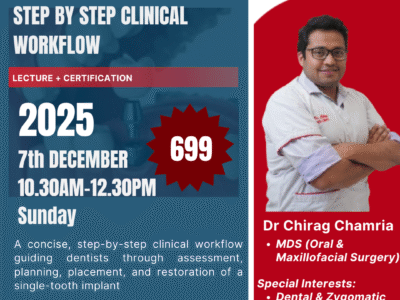

Single Tooth Implant- Step by Step Clinical Workflow
Single-tooth implant treatment works best when it follows a clear, structured, and restorative-driven approach. Every single implant needs proper planning, precise surgical steps, and well-coordinated...

From Exposure to Preservation: The Science & Steps of Successful Direct Pulp Capping
Direct Pulp Capping webinar provides a comprehensive, evidence-based exploration of direct pulp capping (DPC) — a conservative dental procedure aimed at preserving the vitality of...
Course Features
- Lectures 4
- Quiz 1
- Duration 10 weeks
- Skill level All levels
- Language English
- Students 30
- Certificate Yes
- Assessments Yes