
Digital Dentistry: An Overview of Guided Dentistry
Digital Dentistry: An Overview of Guided Dentistry represents a transformative shift from conventional workflows to precision-driven, technology-enabled clinical practice; therefore, it directly influences accuracy, efficiency, and predictability in modern dental treatments. In today’s evolving landscape, digital integration is no longer …
Overview
Digital Dentistry: An Overview of Guided Dentistry represents a transformative shift from conventional workflows to precision-driven, technology-enabled clinical practice; therefore, it directly influences accuracy, efficiency, and predictability in modern dental treatments. In today’s evolving landscape, digital integration is no longer optional—it is becoming the standard of care.
Beyond isolated digital tools, guided dentistry is workflow-driven; therefore, it depends on the seamless integration of CBCT imaging, intraoral scanning, digital planning software, and 3D printing technologies. When used in isolation, outcomes remain limited—when combined effectively, they create highly accurate, minimally invasive, and reproducible treatment approaches.
This lecture explains the fundamentals of digital dentistry and guided workflows; consequently, it clarifies how virtual planning translates into precise clinical execution across procedures such as implant placement, guided surgery, and restorative planning. It also highlights how digital tools reduce human error and enhance treatment outcomes.
It emphasizes case selection, digital data acquisition, treatment planning, and guided execution; meanwhile, it addresses practical considerations, limitations, and cost-effectiveness of integrating digital systems into everyday practice. Participants therefore gain a structured understanding of adopting digital workflows efficiently.
This session on IIDR also demonstrates how guided dentistry improves patient communication, enhances visualization, and increases acceptance of treatment plans—while ensuring higher clinical accuracy and reduced chairside complications.
Through clinical examples and workflow-based discussion, this session builds clarity and confidence in adopting digital dentistry. Therefore, it empowers clinicians to transition from conventional techniques to technology-assisted, precision-driven practice.
Key Takeaways:
-Understanding the fundamentals of digital dentistry and guided workflows
-Role of CBCT, intraoral scanning, and digital planning in clinical practice
-Applications of guided dentistry in implantology and restorative procedures
-Step-by-step digital workflow from planning to execution
-Advantages of guided dentistry in improving accuracy and predictability
-Limitations and practical considerations in digital adoption
-Enhancing patient communication through digital visualization
Join Dr Jayjit Dutta for this insightful IIDR session designed to help clinicians confidently adopt digital workflows in modern dental practice.
Curriculum
- 3 Sections
- 4 Lessons
- 2 Weeks
Instructor

FAQs
Requirements
- BDS, MDS, dental interns, and final-year BDS students
- Fundamental understanding of general dentistry, especially implantology or restorative concepts
- The session is beginner-friendly and suitable for clinicians new to digital workflows
- Interest in adopting digital technologies and improving clinical precision
- Stable internet connection
- Laptop, tablet, or smartphone with audio capability
Features
- CBCT, intraoral scanning, planning software, and 3D printing explained
- Implant placement, surgical guides, and restorative planning
- How digital workflows reduce errors and improve outcomes
- Using digital tools for better visualization and case acceptance
Target audiences
- Dental Interns & Final-Year BDS Students exploring modern dental technologies Clinicians planning to integrate CBCT, scanners, or guided surgery into practice
- General Dental Practitioners looking to adopt digital workflows
- Postgraduate Students (MDS) in Prosthodontics, Implantology, and Conservative Dentistry
- Implantologists & Restorative Dentists interested in guided procedures
- Academicians & Researchers interested in digital advancements in dentistry
You May Like
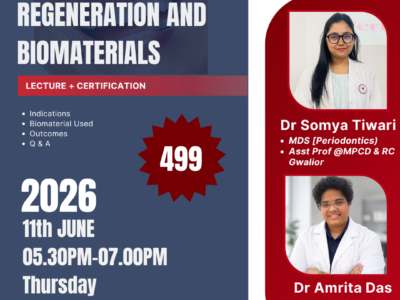

Periodontal Regeneration and Biomaterials
Periodontal regeneration and biomaterials represents a significant advancement in modern periodontal therapy; therefore, it focuses on restoring the lost supporting structures of teeth, including bone,...

Minimal Invasive Dentistry
Minimal invasive dentistry emphasizes preventive measures and conservative treatment techniques to maintain oral health and address dental issues with minimal intervention. Key principles of minimal...

Oral Cancer- Differentiate and Diagnose
Oral cancer refers to cancers that develop in the oral cavity, including the lips, tongue, gums, lining of the cheeks and lips, floor of the...

Bite Right- Dental Occlusion
Dental occlusion, or bite alignment, is the relationship between the upper and lower teeth when the jaws are closed. An ideal bite allows for the...

Post and Core
A dental post and core is a restorative dental treatment used to rebuild and support a tooth that has been extensively damaged or weakened, typically...

Course Features
- Lectures 4
- Quiz 1
- Duration 2 weeks
- Skill level All levels
- Language English
- Students 26
- Certificate No
- Assessments Yes