
Periodontal Regeneration and Biomaterials
Periodontal regeneration and biomaterials represents a significant advancement in modern periodontal therapy; therefore, it focuses on restoring the lost supporting structures of teeth, including bone, cementum, and periodontal ligament. In today’s era of regenerative dentistry, treatment is no longer limited …
Overview
Periodontal regeneration and biomaterials represents a significant advancement in modern periodontal therapy; therefore, it focuses on restoring the lost supporting structures of teeth, including bone, cementum, and periodontal ligament. In today’s era of regenerative dentistry, treatment is no longer limited to disease control—it aims at true tissue regeneration and long-term functional stability.
Regeneration is not just about placing biomaterials; instead, it requires a structured approach involving accurate diagnosis, defect evaluation, and appropriate material selection. Therefore, understanding the biology of healing and the indications for different regenerative techniques is essential. In addition, proper surgical technique and case selection play a crucial role in achieving predictable outcomes.
Without proper planning, regenerative procedures may yield inconsistent results. However, when executed systematically, they offer enhanced clinical outcomes, improved attachment levels, and long-term tooth preservation.
This lecture explains the fundamentals of periodontal regeneration. Consequently, it clarifies how biomaterials—bone grafts, barrier membranes (GTR), and growth factors—aid tissue healing and regeneration. Furthermore, it emphasizes the importance of selecting the right material based on defect characteristics.
It emphasizes case selection and defect morphology. It also covers surgical protocols and biomaterial application. Additionally, it addresses limitations and complications. Furthermore, it highlights key factors affecting success. Participants therefore gain a clear understanding of integrating regenerative procedures into clinical practice.
This IIDR session also demonstrates how regenerative approaches improve clinical predictability, patient outcomes, and long-term prognosis—while reducing the need for more invasive procedures.
Through clinical insights and evidence-based discussions, this session builds clarity and confidence in periodontal regeneration. Therefore, it empowers clinicians to deliver treatment that is biologically driven, precise, and outcome-focused.
Key Takeaways:
- Understanding the fundamentals of periodontal regeneration
- Role of biomaterials in tissue healing and regeneration
- Importance of case selection and defect evaluation
- Overview of bone grafts, membranes, and growth factors
- Step-by-step regenerative approach and surgical considerations
- Factors affecting success and common limitations
- Improving long-term prognosis and tooth preservation
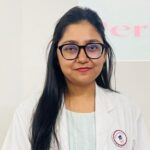
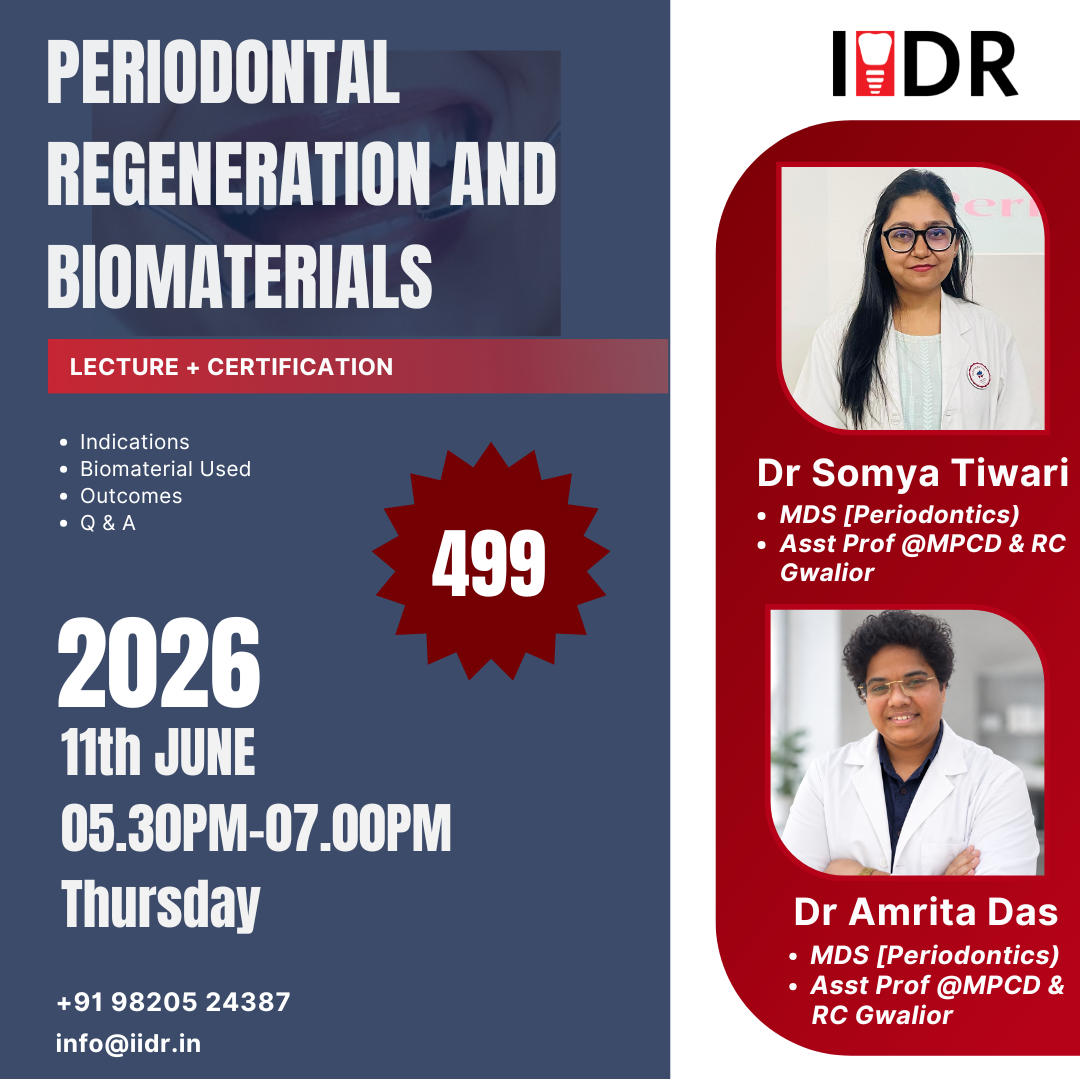
Join Dr. Amrita Das and Dr Somya Tiwari on June 11th at 5:30 PM for this insightful IIDR session focused on mastering periodontal regeneration and biomaterials in clinical practice.
Curriculum
- 3 Sections
- 4 Lessons
- 2 Weeks
Instructor

FAQs
Requirements
- Access to a device (laptop/mobile) with stable internet connection for the online sessions
- Suitable for students, general practitioners, and specialists looking to enhance regenerative skill
- Basic understanding of periodontology and periodontal diseases
- Familiarity with clinical examination and treatment planning
- Interest in regenerative procedures and biomaterials
- No advanced surgical experience required (beginner to intermediate friendly)
Features
- Comprehensive overview of periodontal regeneration principles
- Focus on biomaterials and their clinical applications
- Step-by-step understanding of regenerative techniques and protocols
- Emphasis on case selection and defect-based treatment planning
- Insights into real clinical scenarios and outcomes
- Discussion on limitations, complications, and success factors
- Practical knowledge for integration into everyday clinical practice
Target audiences
- Any dental professional interested in improving long-term periodontal outcome
- Undergraduate dental students (BDS) building fundamentals in periodontology
- Interns and fresh graduates interested in regenerative procedures
- General dental practitioners looking to expand treatment options
- Periodontists seeking to refine regenerative techniques
- Implantologists focusing on bone regeneration and site development s
You May Like
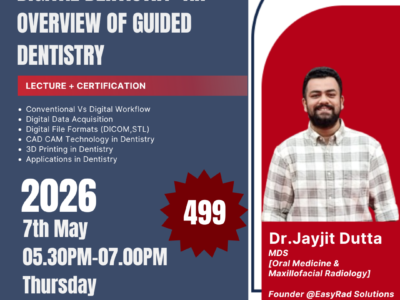

Digital Dentistry: An Overview of Guided Dentistry
Digital Dentistry: An Overview of Guided Dentistry represents a transformative shift from conventional workflows to precision-driven, technology-enabled clinical practice; therefore, it directly influences accuracy, efficiency,...
Course Features
- Lectures 4
- Quiz 1
- Duration 2 weeks
- Skill level All levels
- Language English
- Students 12
- Certificate No
- Assessments Yes