
Neck Dissection
Accurate knowledge of neck anatomy and a structured surgical approach are essential for achieving predictable outcomes in oral cancer management. Moreover, neck dissection stands as one of the most critical procedures in head and neck oncology. It plays a key …

Overview
Accurate knowledge of neck anatomy and a structured surgical approach are essential for achieving predictable outcomes in oral cancer management.
Moreover, neck dissection stands as one of the most critical procedures in head and neck oncology. It plays a key role in diagnosis, staging, and treatment planning. In addition, the procedure goes far beyond simply removing lymphatic tissue. It improves disease control, protects vital structures, and enhances patient survival and quality of life.
Furthermore, this session explains the core surgical principles behind neck dissection and highlights their clinical relevance.
It also highlights its practical use in everyday oncology practice. Participants will learn to differentiate between the various types of neck dissections. They will understand the correct anatomical boundaries and learn how to make decisions based on tumor stage and nodal involvement.
The course focuses on proper surgical planning. It stresses the importance of preserving function while achieving oncologic clearance. It also explains the key anatomical landmarks that guide safe and efficient dissection.
Additionally, the session will address common intraoperative challenges, strategies to avoid complications, and tips for achieving optimal oncologic and functional outcomes. Real surgical cases, images, and step-by-step demonstrations will help attendees confidently apply theoretical concepts in clinical practice.
Key Learning Points:
-Understand the classification, indications, and principles of neck dissection.
-Learn essential anatomical landmarks and structures to preserve.
-Master stepwise surgical techniques for different types of dissections.
-Avoid common intraoperative and postoperative complications.
-Apply evidence-based decision-making for managing metastatic cervical nodes.
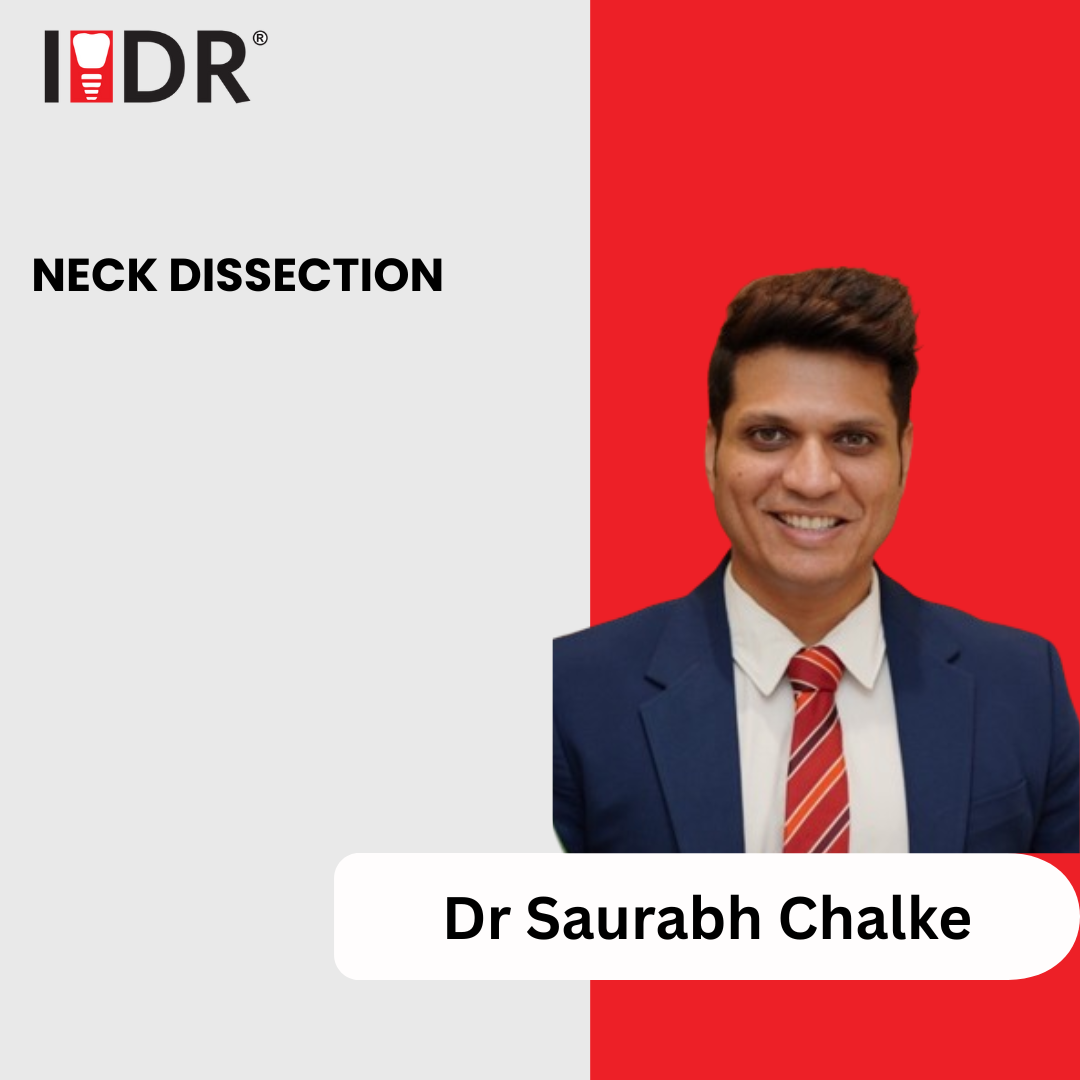
Join Dr. Saurabh Chalke for this comprehensive and clinically oriented session on neck dissection. Strengthen your surgical understanding, improve oncologic decision-making, and enhance patient outcomes in head and neck cancer care.
Watch this session online and deepen your practical knowledge of neck dissection with IIDR.
Curriculum
- 3 Sections
- 3 Lessons
- 90 Minutes
- Introduction2 Items
- Webinar1 Item
- Quiz1 Item
Instructor
FAQs
Requirements
- Basic Knowledge of Oral & Maxillofacial Anatomy
- This course is suitable for BDS, MDS residents, general practitioners, and clinicians involved in oncology or surgical care.
- Learners should be willing to deepen their understanding of neck dissections and cancer management protocols.
- Reliable Internet Connection
- Ensure access to a device capable of streaming video lectures and viewing clinical presentations.
- Willingness to Engage and Learn
Features
- Comprehensive Overview of Neck Dissection
- Emphasizes practical decision-making for tumor staging and cervical node management.
- Highlights essential landmarks and structures to preserve during surgery.
- Breaks down the procedure into clear, understandable phases for better learning.
- Includes clinical examples, surgical photos, and demonstrations for real-world application.
- Encourages questions and participation for deeper understanding.
Target audiences
- General Dentists who want to understand oncology-related surgical procedures
- Oral & Maxillofacial Surgeons looking to strengthen their knowledge of neck anatomy and dissection techniques.
- ENT Surgeons and Residents involved in head and neck cancer management
- MDS Students (OMFS, Oral Pathology, Oral Medicine) seeking deeper clinical exposure.
- Oncology Practitioners who wish to refine their decision-making for cervical node management.
- Interns and Final-Year Dental Students interested in expanding their understanding of head and neck surgical protocols.
- Clinicians involved in cancer screening and diagnosis who want to improve their treatment planning.
You May Like

A Beginner’s Guide to Clinical Photography

Clinical dental photography has become an essential part of modern dental practice; therefore, it plays a crucial role in diagnosis, treatment planning, documentation, and patient...
Early Signs and Management of Oral and Maxillofacial Cancers

Signs and Management of Head and Neck Cancers is a critical topic in contemporary dental practice; therefore, it directly impacts early diagnosis, patient survival, treatment...

Comprehensive Dental Management of SHCN: Where Clinical Skill Meets Compassionate Care

Comprehensive dental management of Special Health Care Needs (SHCN) patients is no longer limited to technical proficiency alone; therefore, it demands a thoughtful balance between...
The Art of Instrument Bypass- When, Why and How

Instrument bypass is a critical skill in endodontics that can often mean the difference between saving a tooth and referring or extracting it. It is...

From Exposure to Preservation: The Science & Steps of Successful Direct Pulp Capping

Direct Pulp Capping webinar provides a comprehensive, evidence-based exploration of direct pulp capping (DPC) — a conservative dental procedure aimed at preserving the vitality of...
Course Features
- Lectures 3
- Quiz 1
- Duration 90 minutes
- Skill level All levels
- Language English
- Students 70
- Certificate No
- Assessments Yes