
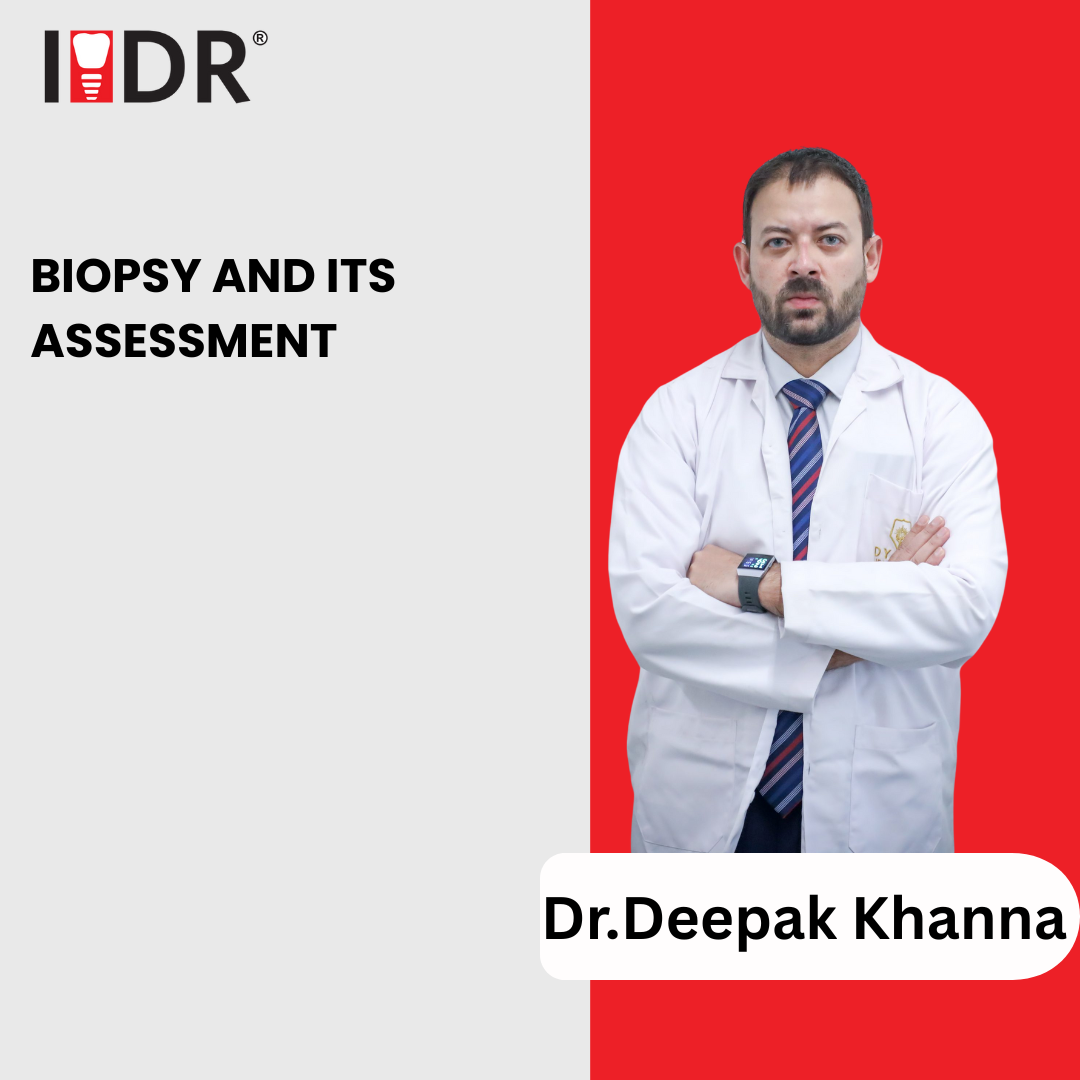
Biopsy and its Assessment
Biopsy and its Assessment is no longer an optional skill — it is a critical responsibility for every dental clinician. Therefore, the early identification and precise assessment of oral lesions significantly impact diagnosis, treatment planning, and overall patient outcomes. This …
Overview
Biopsy and its Assessment is no longer an optional skill — it is a critical responsibility for every dental clinician. Therefore, the early identification and precise assessment of oral lesions significantly impact diagnosis, treatment planning, and overall patient outcomes. This session explores how dentists can confidently recognize suspicious lesions, select the appropriate type of biopsy, and understand the fundamentals of histopathological assessment.
This IIDR lecture focuses on when to biopsy, what to biopsy, and how to biopsy — while eliminating common fears, misconceptions, and diagnostic delays. Participants will gain clarity on differentiating between benign, premalignant, and malignant presentations through structured clinical evaluation.
Furthermore, this session simplifies the entire biopsy workflow—from clinical examination and case documentation to proper specimen handling and pathology report interpretation. Importantly, special emphasis is placed on avoiding common clinical errors that result in inconclusive or misleading biopsy outcomes.
Additionally, through clear frameworks, practical checklists, and clinical scenarios, this lecture helps clinicians move from hesitation to clinical confidence in managing oral lesions. Real-life cases will guide decision-making in areas such as patient consent, site selection, choosing between punch and incisional biopsy, and post-biopsy care.
Key Takeaways
-
Indications for biopsy in dental practice
-
Clinical assessment of oral lesions: red flags and warnings
-
Types and selection criteria
-
Step-by-step protocol and specimen handling
-
Understanding reports and correlating clinically
-
Avoiding diagnostic delays and medico-legal pitfalls
Join Dr. Deepak Khanna for this focused webinar designed to strengthen your diagnostic confidence and clinical decision-making. Learn a thorough, ethical, and clinical approach to biopsy and lesion assessment that every dentist must master.
As a result, this session covers lesion evaluation and biopsy planning. Moreover, it builds confidence in execution and interpretation—supporting early diagnosis and better patient care.
Enroll today to reserve your seat and elevate your diagnostic skills with IIDR.
Curriculum
- 3 Sections
- 3 Lessons
- 60 Minutes
- Introduction2
- About the Event1
- Quiz1
Instructor

FAQs
Requirements
- BDS degree (mandatory)
- MDS in Oral Medicine, Oral Pathology, Oral Surgery, or related specialties (optional / beneficial)
- Basic understanding of oral anatomy and oral mucosal lesions
- Familiarity with routine intra-oral examination
- Fundamental knowledge of oral medicine and pathology is helpful but not compulsory
- Willingness to identify, evaluate, and manage suspicious oral lesions
- Openness to integrating biopsy decision-making into daily dental practice
- Laptop / tablet / smartphone
- Stable internet connection
Features
- Clinical decision-making focused approach to biopsy in dental practice
- Step-by-step guidance on when, where, and how to perform a biopsy
- Clear differentiation between benign, premalignant, and malignant oral lesions
- Practical overview of biopsy techniques – incisional, excisional, and punch biopsy
- Real-life case discussions highlighting common diagnostic dilemmas
- Designed to build confidence in early diagnosis and timely referral
Target audiences
- General Dental Practitioners seeking confidence in identifying and assessing oral lesions
- Oral Medicine & Oral Pathology clinicians involved in diagnosis and lesion evaluation
- Oral and Maxillofacial Surgeons performing minor oral surgical procedures
- Postgraduate students (MDS) in Oral Medicine, Oral Surgery, Oral Pathology, Periodontics, and related specialties
- Dental interns looking to build strong diagnostic foundations
- Clinicians in primary care or community settings involved in early oral cancer screening
- Academicians and clinical faculty aiming to update diagnostic and biopsy protocols
You May Like

A Beginner’s Guide to Clinical Photography
Clinical dental photography has become an essential part of modern dental practice; therefore, it plays a crucial role in diagnosis, treatment planning, documentation, and patient...


Dentists Induction Training Program
Starting a new role as a dentist in a clinical practice involves more than just clinical knowledge—it requires adapting to the clinic’s workflows, treatment standards,...

Early Signs and Management of Oral and Maxillofacial Cancers
Signs and Management of Head and Neck Cancers is a critical topic in contemporary dental practice; therefore, it directly impacts early diagnosis, patient survival, treatment...

The Reign of New Era in Behavior Management – Upscaling Sensory Dental Environment
The Reign of a New Era in Behavior Management – Upscaling the Sensory Dental Environment marks a fundamental shift in how dental care is delivered;...


Comprehensive Dental Management of SHCN: Where Clinical Skill Meets Compassionate Care
Comprehensive dental management of Special Health Care Needs (SHCN) patients is no longer limited to technical proficiency alone; therefore, it demands a thoughtful balance between...
Course Features
- Lectures 3
- Quiz 1
- Duration 60 minutes
- Skill level All levels
- Language English
- Students 172
- Certificate No
- Assessments Yes